
Israel Strikes Southern Lebanon Amid Stalled Political Talks
Translated & summarized from Al-Shams by baba
The Israeli military conducted airstrikes and artillery shelling in southern Lebanon on Tuesday, despite de-escalation understandings, as political negotiations between Lebanon and Israel remain stalled. Lebanese President Joseph Aoun and Prime Minister Nawaf Salam urged an end to hostilities and warned of further escalation. Key disagreements persist over border arrangements and disarmament, hindering efforts to achieve stability on the border.
The story in 6 lines · by baba
- Israeli military intensified attacks in southern Lebanon with airstrikes and artillery shelling on Tuesday.
- The military actions occurred amidst stalled political negotiations between Lebanon and Israel.
- Lebanese President Joseph Aoun called for an end to Israeli aggressions and safe return of residents.
- Lebanese Prime Minister Nawaf Salam warned of risks of war and Israeli expansion.
- Disagreements over border arrangements and Hezbollah disarmament hinder stability efforts.
- The UN documented Israeli violations of Lebanese territory in August 2026.
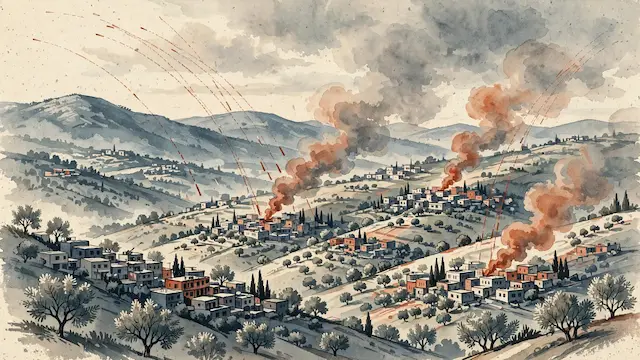
The Israeli military intensified its attacks on southern Lebanon on Tuesday, conducting airstrikes, artillery shelling, and explosions across several towns. These actions continue despite declared de-escalation understandings and coincide with stalled political negotiations between Beirut and Tel Aviv. Lebanese media reported Israeli warplanes carried out two airstrikes targeting Kafr Tibnit in the Nabatieh district and Qantara in Marjayoun district. Other strikes hit the outskirts of Bani Hayyan, Markaba, and Jermeq. In Jermeq, an Israeli drone fired a guided missile, while artillery fire extended to Wadi Zibqin, the outskirts of Mansouri, and the vicinity of Zawtar al-Sharqiyah and Mefdouk. The Israeli army also carried out an explosion operation on Shreika hill north of Khiam. These developments occur amid ongoing Israeli aggressions, including aerial raids, artillery fire, facility bombings, and attacks on homes and agricultural lands, raising concerns about escalating confrontations and their impact on border residents.
The military escalation is happening concurrently with the failure of Lebanese-Israeli political negotiations, which have been halted since the Florida meeting. This comes as U.S.-Iran talks continue, with anticipation of their potential impact on the situation in Lebanon. In this context, Lebanese President Joseph Aoun called for respect for international humanitarian law and an end to Israeli aggressions, emphasizing the need to create conditions for the safe return of southern residents to their homes. Lebanese Prime Minister Nawaf Salam warned of the risks of sliding back into war, urging avoidance of entanglements that could lead to new conflicts. He stated that continued confrontations could provide Israel with further pretexts to expand its military presence and operations in the south.
Disagreements persist over border arrangements and the future of southern Lebanon, with Lebanon insisting on an Israeli withdrawal from occupied territories and Israel demanding Hezbollah's disarmament. These issues remain obstacles to a settlement that would ensure calm on the border, especially with ongoing military operations reducing the chances of resuming negotiations. In August 2026, the United Nations documented Israeli violations of Lebanese airspace and territory, including hundreds of projectiles fired into southern Lebanon, reflecting continued breaches and the fragility of stability understandings.
Mentioned
The same event, reported separately by each outlet. Open a few to compare what different newsrooms emphasize — and what they leave out.
Arab 2

Not the same event — other stories that share this one’s people, places, or theme: background, reactions, and follow-ups.
