Trump Links Republican Losses to Anti-Israel Sentiment, Defends Iran Strike
Translated & summarized from Jüdische Allgemeine by baba
Former US President Donald Trump stated that Republican election losses were due to anti-Israel sentiment and defended his strike on Iranian nuclear facilities, claiming Israel's existence depends on him. He also announced plans to seek war cost reimbursements from protected nations and blamed rising gas prices and the Iran war for GOP setbacks. Trump reiterated his commitment to preventing Iran from obtaining nuclear weapons, a decision he would make again, and indicated no immediate need for further strikes on Iranian nuclear sites.
The story in 5 lines · by baba
- Donald Trump claims Israel's existence relies on his past actions, including a strike on Iranian nuclear facilities.
- Trump links Republican election losses to growing anti-Israel sentiment and the unpopularity of the Iran war.
- The former president announced the US will seek reimbursement for war costs from militarily protected nations.
- Rising gas prices were cited as a significant domestic issue contributing to the Republican Party's electoral defeat.
- Trump asserted that preventing Iran from acquiring nuclear weapons was a major achievement of his presidency.
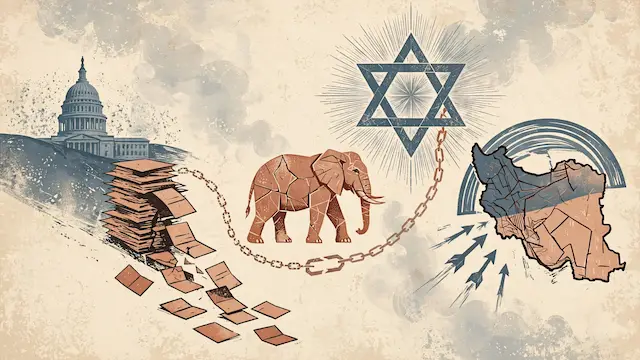
Former US President Donald Trump attributed Republican losses in recent elections to growing anti-Israel sentiment in the United States and defended his administration's strike on Iranian nuclear facilities, asserting that Israel would not exist today without his intervention. In a "60 Minutes" interview aired Sunday, Trump highlighted the use of B-2 bombers over a year prior to strike three Iranian nuclear sites as crucial for protecting the Jewish state. "Israel would not exist without us. Israel only exists because of Donald Trump, because we flew in with those great B-2 bombers and hit those three facilities," he stated.
Trump also announced that the United States would seek reimbursement for all war costs from countries it has militarily protected, arguing these nations would not have survived without American support. He linked domestic political consequences to the conflict, citing the Iran war's unpopularity and rising gas prices as factors in the Republican Party's November 3 election setbacks. Despite not being on the ballot himself, Trump noted his extensive campaigning for Republican candidates, observing that while his rallies drew large crowds, this enthusiasm did not fully translate to the candidates he endorsed.
The rise in fuel prices was particularly problematic, Trump noted, with gas prices in some areas increasing significantly. While still lower than during the Obama-Biden administrations, the increase was being blamed on the war with Iran. Trump's supporters, operating under the MAGA slogan, generally oppose further wars, and he claimed to have ended eight conflicts, aiming to keep the US out of military engagements. Vice President JD Vance had also identified the Iran war as a key factor in the Republican defeat, a view Trump did not explicitly dispute, stating, "I don't disagree with that."
However, Trump maintained that the US had already won the war, with Iran weakening economically and politically, making negotiations likely. He suggested an agreement with Iran might have been reached before or shortly after the elections if not for the campaign. Trump reiterated he would make the decision to strike Iranian nuclear facilities again, prioritizing the prevention of an Iranian nuclear bomb over short-term political costs. "I stopped them from getting a nuclear weapon. That is a big deal," he said, adding that while negotiations were complicated by the election, an agreement remains possible.
Regarding further military operations against Iran, Trump indicated no immediate need, citing that the nuclear facilities are buried deep underground. US forces would continue to monitor the sites, utilizing Space Force capabilities, including surveillance of the Pickaxe Mountain location, where a rapid response could be initiated if necessary.
Mentioned
The same event, reported separately by each outlet. Open a few to compare what different newsrooms emphasize — and what they leave out.
Centre 2

Not the same event — other stories that share this one’s people, places, or theme: background, reactions, and follow-ups.




