
Olive Oil Scam: Hundreds of Israelis Duped by Chemical Liquid Posing as Premium Oil
Translated & summarized from N12 by baba
Hundreds of Israelis have been defrauded by a scam selling fake olive oil, receiving containers filled with an unidentified chemical liquid instead of premium oil. Advertised on social media, the con artists promise quality oil but disappear after payment, blocking victims. Despite numerous police complaints, most cases are closed, prompting victims to organize and seek action themselves due to concerns about financial loss and potential health hazards from the unknown substance.
The story in 5 lines · by baba
- Hundreds of Israelis were defrauded by a scam selling fake olive oil, receiving chemical liquid instead.
- Scammers advertised on social media, promising quality oil but blocking buyers after payment.
- Victims discovered a hidden cup of real oil above a container of unidentified chemical liquid.
- Most police complaints have been closed, leading victims to organize for collective action.
- Victims are concerned about financial loss and the potential health risks of the unknown substance.
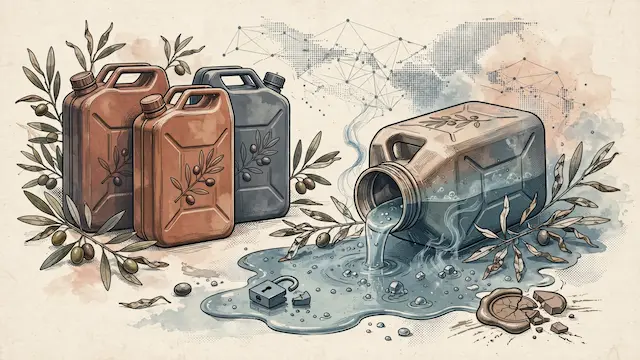
Hundreds of Israelis have fallen victim to a sophisticated scam, primarily advertised on social media under names like "Zait Roots," which falsely sells 18-liter containers of olive oil for around 550 shekels. The con artists promise delivery and a "try before you buy" policy, but after payment, customers receive containers filled with an unidentified chemical liquid, not olive oil. The perpetrators then block the buyers and disappear with the money. Victims who have posted warnings online have discovered the widespread nature of the fraud.
One victim, Nitai Habshush, described how he was initially impressed by the quality of a small sample of oil, leading him to purchase an additional container at a discount. However, upon attempting to use the oil, he discovered a small plastic cup filled with real olive oil taped beneath the spout. Once this sample was depleted, the rest of the container contained a foul-smelling, dark liquid he suspects is toxic. Other victims reported receiving unmarked containers that felt too light for their advertised volume.
Victims attempting to warn others on social media find their comments deleted and their accounts blocked. Many have filed police complaints, but most have been closed due to insufficient evidence. Frustrated by the lack of official action, some victims, like Daniel, have created shared documents to gather information for potential collective legal action and have reported the scammers to various authorities, including consumer protection agencies and tax authorities, citing potential tax evasion and money laundering.
Despite efforts by victims to provide evidence, including security camera footage of delivery vehicles, authorities have been slow to act. The police stated that while all complaints are investigated, cases are closed if the evidentiary basis is insufficient, but will be reopened if new information emerges. Victims express concern not only about the financial loss but also about the potential health risks posed by the unknown chemical substance.
Mentioned
The same event, reported separately by each outlet. Open a few to compare what different newsrooms emphasize — and what they leave out.
Coverage from N12
