
Olive Oil Scam: Hundreds of Israelis Duped by Chemical Liquid Posing as Oil
Translated & summarized from Mako by baba
Hundreds of Israelis have been defrauded by a sophisticated olive oil scam advertised on social media, where they pay for 18-liter containers but receive an unknown chemical liquid. Victims report tasting genuine oil from a small cup placed inside the container, only to find the rest is a harmful substance. Despite numerous complaints, police have closed most cases due to lack of evidence, while victims attempt to organize and warn others about the widespread fraud and potential health risks.
The story in 6 lines · by baba
- Hundreds of Israelis were defrauded by a scam selling fake olive oil containing an unknown chemical liquid.
- Scammers used social media ads and a small cup of real oil to deceive customers into buying large containers.
- Victims report the rest of the container held a foul-smelling black liquid described as "poison" or "machine oil."
- Police have closed most complaints due to insufficient evidence, frustrating victims seeking action.
- Scammers block victims on social media and create new pages to continue the fraud.
- Victims are concerned about financial loss and the serious health implications of the unknown substance.
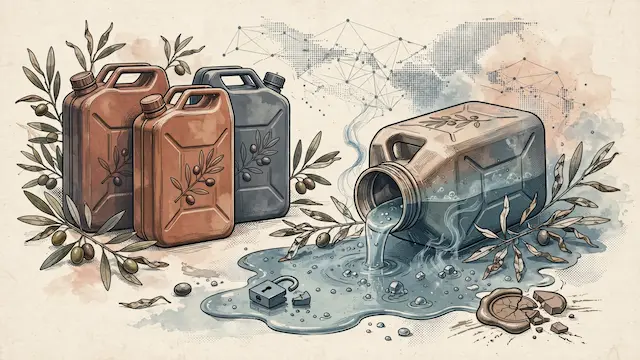
Hundreds of Israelis have fallen victim to a sophisticated scam, primarily advertised on social media under names like "Olive Root," which offers 18-liter containers of olive oil for an attractive price of 550 shekels, including home delivery. After payment, customers discover they have received an unidentified chemical liquid instead of olive oil. The scammers block buyers immediately and disappear with the money. Many victims have taken to social media to warn others, revealing the widespread nature of the fraud. One victim, Daniel, created a shared document for affected individuals to report their experiences. Investigations by N12 indicate that hundreds have paid for a substance that is not olive oil. Despite police complaints, most cases are closed, leaving victims hoping others will be alerted.
The scam begins with Facebook ads promising high-quality olive oil at a good price with home delivery, often assuring customers they can refuse the purchase if unsatisfied. Victims like Nitai Habshush tasted the oil, found it to be of good quality, and even purchased an additional container at a discount. However, upon closer inspection after the delivery, they discovered a small plastic cup filled with genuine olive oil placed just below the container's spout. Once this small cup is emptied, the rest of the container is revealed to be filled with an unknown, foul-smelling black liquid, described by victims as "poison" or "machine oil."
Victims like Michal reported receiving unmarked containers that felt too light for 18 liters. When they questioned the delivery person, they were told they were just the courier. After the delivery, attempts to contact the sellers were met with disconnected numbers. Victims are concerned not only about the financial loss but also about the potential health implications of the unknown substance. Efforts to warn others on social media are often met with immediate blocking and deletion of comments by the scammers, who then create new pages to continue their operations.
Victims who tried to report the fraud to official channels encountered difficulties. Daniel, who was scammed in April, initiated a shared Google Doc to gather victims for a potential class-action lawsuit after realizing authorities were slow to act. He contacted various bodies including the Olive Council, the Consumer Protection Authority, the Ministry of Agriculture, the Ministry of Health, and even the Tax Authority, reporting tax evasion and money laundering, as well as reporting the issue to Facebook. Despite his efforts, he received little satisfaction, with one investigator's phone number leading to no concrete action. Another victim, Ronen, provided security camera footage of the delivery vehicle and its license plate, but no arrests have been reported.
The police stated that all complaints are investigated, but in these specific cases, the files were closed due to insufficient evidence. They added that if new evidence emerges, the cases will be re-examined.
Mentioned
The same event, reported separately by each outlet. Open a few to compare what different newsrooms emphasize — and what they leave out.
Coverage from Mako
