
Urban Renewal Project Pipeline Faces Delays and Economic Uncertainty
Translated & summarized from Globes by baba
Tens of thousands of Israeli apartments are in the urban renewal pipeline, but realizing them faces significant delays and economic uncertainty. Companies like Aura Construction and Azorim report large project backlogs, yet only a small fraction are currently under construction. The process requires extensive planning, approvals, and financing, with timelines often stretching to three to four years from planning to groundbreaking. Economic feasibility is constantly re-evaluated due to fluctuating costs and market conditions, impacting project viability and developer commitments.
The story in 6 lines · by baba
- Urban renewal projects in Israel have tens of thousands of apartments in the pipeline.
- Realizing these projects requires homeowner consensus, planning approvals, and financing.
- Companies like Aura Construction and Azorim report large backlogs but low construction rates.
- Timelines from planning to construction can extend to three to four years.
- Economic feasibility is a constant concern due to fluctuating costs and market conditions.
- Regulatory bodies require detailed disclosures on project feasibility and progress.
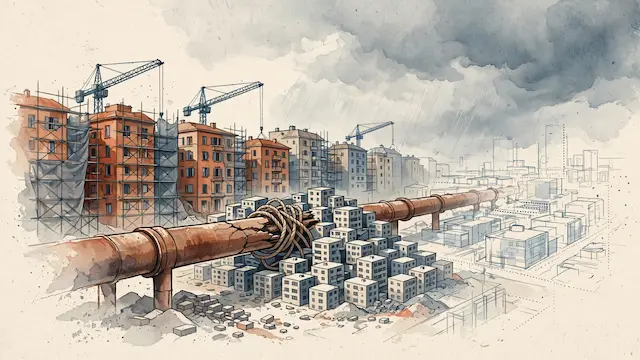
Tens of thousands of apartments are in the pipeline for urban renewal projects in Israel, but realizing this potential is complex and faces significant hurdles. A project's "pipeline" refers to the total number of initiatives a company is advancing, along with its estimated number of units. In urban renewal, this pipeline can include projects at various stages, from initial agreements with homeowners and preliminary planning to those already under construction. The actualization of these projects requires homeowner consensus, planning approvals, building permits, financing, and economic viability.
Companies like Aura Construction showcase the diverse stages of their pipelines. Aura reports approximately 85,000 apartments across its residential activities, with about 78,000 in urban renewal. Of these, roughly 8,000 are in projects where construction and/or marketing have begun, 5,600 are expected to be ready for marketing or execution within the next year, 40,000 are in advanced planning, and 31,000 are in future planning, which includes projects not yet having secured majority signatures.
Azorim presents a similar picture, with about 42,000 urban renewal apartments in its pipeline as of June 2026. However, only about 3,100 are under construction, representing roughly 7.6% of the total. Another 78 units are slated for commencement in the coming year, and about 4,800 have approved building plans. The majority, around 33,000 units, are still in various planning stages.
The economic model for urban renewal allows developers to build a substantial future activity base without significant upfront capital. Developers secure opportunities by agreeing with homeowners to provide new apartments in exchange for the right to build and sell additional units. This structure allows for large project scopes long before full resources are needed. However, as projects progress, developers must invest more resources, facing commitments for significant construction services.
Regulatory bodies like the Israel Securities Authority now require detailed disclosures to help investors understand project feasibility. These disclosures must include details on existing and planned units, planning status, homeowner consent rates, and required conditions for realization. Companies projecting revenue or profitability must also explain their assumptions, certainty levels, and influencing factors.
Experts emphasize that the timeline from approved plans and high homeowner consent to actual construction can take three to four years, depending on the project, developer, and local authority. This extended timeline impacts economic feasibility, as projected revenues must cover construction, homeowner compensation, temporary housing, financing, and other expenses. Fluctuations in construction costs, sale prices, or rental periods can alter a project's financial outcome, sometimes leading developers to renegotiate terms with residents.
Furthermore, the ability to manage the entire process, including relocation and return, is crucial. Experience in standard construction does not guarantee success in managing the complexities of urban renewal. Developers must ensure their financial projections are realistic and that they can secure the necessary funding and execution capabilities to bring their extensive pipelines to fruition.
Mentioned
Not the same event — other stories that share this one’s people, places, or theme: background, reactions, and follow-ups.
