
Midterm Election Losses May Derail Vance's 2028 Presidential Bid
Translated & summarized from Kikar HaShabbat by baba
Vice President J.D. Vance's presidential aspirations for 2028 are in doubt following the Republican Party's significant losses in the midterm elections. The defeats, linked to the war in Iran and economic fallout, have fractured Trump's coalition and led major donors to question Vance's viability. While Vance has attempted to distance himself and call for policy changes, President Trump has not endorsed him, and Vance is reportedly considering his next steps carefully.
The story in 6 lines · by baba
- Republican midterm election losses may derail Vice President J.D. Vance's 2028 presidential ambitions.
- The defeats are attributed to the war in Iran and its economic consequences, including rising fuel prices.
- Major Republican donors are reportedly hesitant to support Vance due to concerns about his association with Trump's policies.
- Vance has attempted to differentiate himself by criticizing the war and calling for a changed relationship with Israel.
- President Trump has not committed to supporting Vance's potential presidential run.
- Alternatives like Florida Governor Ron DeSantis are being considered by some Republicans.
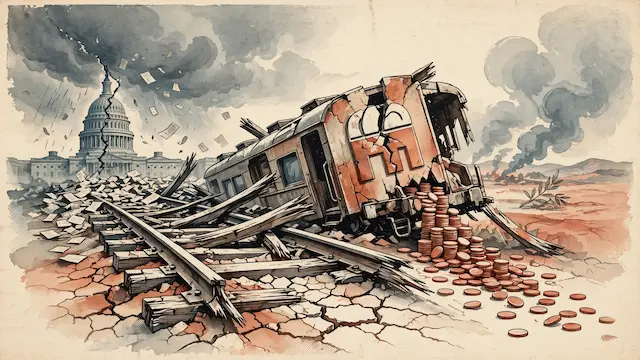
The Republican Party's significant losses in the midterm elections, described as their worst political defeat since Watergate, are casting a shadow over Vice President J.D. Vance's political future and potentially disrupting the 2028 presidential race, according to the Wall Street Journal. Reports indicate that on election night, as President Donald Trump and Vance watched the results from the White House amid a Democratic wave, Vance received a text message from a trusted confidant advising him to reconsider his presidential aspirations. Vance and his close advisors are now engaged in urgent internal discussions about the viability of a 2028 campaign, with some political allies expressing doubt about any Republican's chances of winning the next election.
The deep political rift is reportedly fueled by the war in Iran and its economic consequences, including rising fuel prices that have burdened the working class. Vance, who has historically positioned himself as opposed to U.S. military involvement abroad, attempted to prevent escalation. Text correspondence revealed that Vance personally contacted Rasmussen Reports to include specific questions in a poll. The findings showed that 62% of the public would accept at most 100 American casualties in a war, and 65% required congressional approval. Vance presented these figures to Trump in an effort to promote a diplomatic solution. However, President Trump opted for military action and later stated he had no regrets and would act the same way again.
The midterm election results have fundamentally altered the electoral map. Democrats gained seven Senate seats, including Vance's former seat in Ohio, and won governorships in traditionally Republican strongholds like Georgia and Texas. Trump's electoral coalition, which Vance hoped to maintain, is fracturing as Hispanic voters and anti-war factions turn away from the party. This defeat has also caused deep frustration among major Republican donors, with several expressing opposition to supporting Vance in 2028 due to concerns that a candidate associated with the current administration would be burdened by Trump's unpopular policies and the election's fallout. Alternatives like Florida Governor Ron DeSantis, who has publicly criticized the war and fuel prices, have been suggested.
Sources close to Vance, however, reject these claims, arguing that the defeat is not a rejection of Trump or Vance but a backlash against the Middle East conflict that will subside. Vance has begun to cautiously differentiate himself, publishing an article identifying the war as a primary cause of the failure and calling for a shift in the party's relationship with Israel, a move seen in Washington as an attempt to forge an independent identity for a future run. While Vance's associates have proposed alternative paths, such as returning to Ohio to run for his Senate seat or for governor, he has rejected these ideas.
Despite the turmoil, Vance retains significant structural advantages, including high public recognition, early poll leads, support from influential figures like Donald Trump Jr., and his role as chairman of the Republican National Committee's finance arm. President Trump himself has avoided committing to supporting Vance, stating he does not know who will run. Vance has indicated he will make his decision about his future at his own pace, acknowledging the significant toll a presidential campaign takes on his family.
Mentioned




