
US Central Command Forms Task Force to Disrupt Iran's Smuggling Routes
Translated & summarized from JDN by baba
The U.S. Central Command has established a task force to disrupt Iran's overland smuggling routes for illegal shipments. This initiative coincides with a "Rewards for Justice" offer of up to $20 million for information on Iran's nuclear program. Separately, Qatar is reportedly proposing a plan to de-escalate tensions, involving the Strait of Hormuz and nuclear facility monitoring in exchange for sanctions relief.
The story in 5 lines · by baba
- U.S. Central Command created a task force to block Iran's overland smuggling routes.
- The task force aims to stop Iran from moving advanced weapons and materials overland.
- A $20 million reward is offered for information on Iran's nuclear program.
- Qatar is reportedly proposing a plan to ease U.S.-Iran tensions.
- The Qatari plan includes reopening the Strait of Hormuz and nuclear site monitoring.
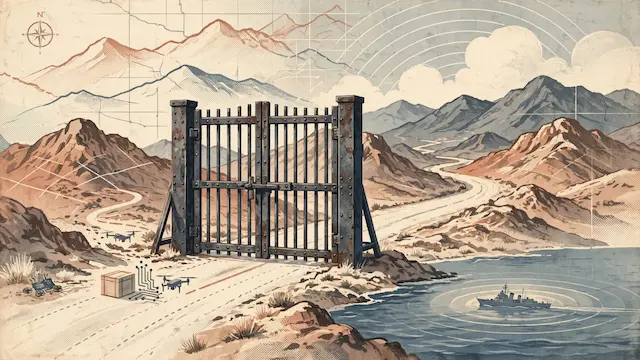
The U.S. Central Command (CENTCOM) has announced the establishment of a dedicated task force aimed at disrupting Iran's overland smuggling routes used for illegal shipments. The decision was made by CENTCOM Commander Admiral Brad Cooper to support U.S. government efforts to prevent Tehran from transporting advanced weapons and other materials via land routes in the region.
In parallel with this operational decision, CENTCOM released a statement as part of the U.S. State Department's "Rewards for Justice" program. This announcement offers up to $20 million in financial reward for credible information regarding Iran's nuclear program, along with assistance in relocating. This reward offer comes as Washington and Tehran are engaged in indirect talks to reach a new agreement.
Meanwhile, the British newspaper The Guardian revealed that Qatar is promoting a new framework to end the conflict between the United States and Iran. The Qatari proposal centers on reopening the Strait of Hormuz and resuming international monitoring of Iranian nuclear facilities that have been impacted by attacks, in exchange for lifting the U.S. naval blockade and releasing some frozen Iranian assets. At this stage, neither side has reported an official agreement on the proposed framework.
Mentioned



