
US Establishes Task Force to Disrupt Iran's Illicit Arms and Tech Transfers
Translated & summarized from N12 by baba
The U.S. Central Command has launched "Iron Gate," a new task force to block Iran's overland arms and technology smuggling routes. Commander Admiral Brad Cooper stated the force reinforces a naval blockade that has already stopped billions in oil exports. The initiative follows reports of Iran negotiating for Russian S-400 air defense systems and Vice President J.D. Vance's involvement in indirect talks with Iran regarding a ceasefire and nuclear program.
The story in 6 lines · by baba
- U.S. Central Command established "Iron Gate" task force to stop Iran's illicit arms and tech transfers.
- The task force will operate from Tampa, Florida, with about 20 civilian and military personnel.
- Admiral Brad Cooper said the force reinforces a tight naval blockade on Iran.
- The naval blockade has already prevented over $25 billion in Iranian crude oil exports.
- Iran is reportedly negotiating with Russia for advanced S-400 air defense systems.
- Vice President J.D. Vance is involved in indirect U.S.-Iran talks for a ceasefire and nuclear deal.
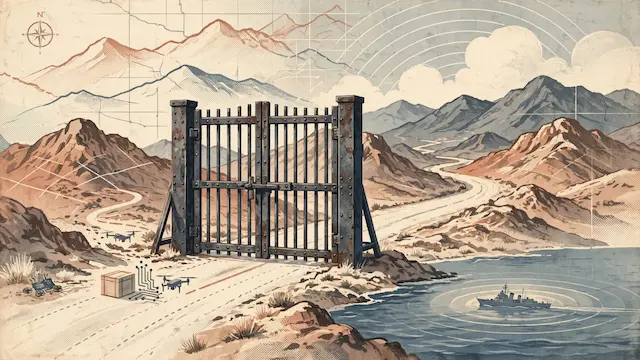
The U.S. Central Command (CENTCOM) announced the establishment of a new task force, codenamed "Iron Gate," aimed at disrupting Iran's overland routes for illicit transfers of weapons and dual-use technologies. The task force, comprising approximately 20 civilian and military personnel, will operate from Tampa, Florida, and coordinate with other U.S. government agencies.
Admiral Brad Cooper, Commander of CENTCOM, ordered the creation of "Iron Gate" to support U.S. efforts to prevent Iran from using land routes to transport advanced weaponry, dual-use materials, sanctioned goods, and illicit revenue streams. Cooper stated that the task force reinforces the success of the "tight naval blockade" imposed on Iran, which has already prevented the export of over $25 billion in crude oil in recent months.
The new initiative is designed to further limit Iran's ability to fund terrorism, rebuild weapons manufacturing facilities, and replenish its military arsenal. This move comes amid reports that Iran and Russia are negotiating a significant arms deal, including the potential supply of advanced Russian S-400 air defense systems to Tehran. An Iranian official told The Telegraph that these discussions, which also involve a new gas pipeline, are driven by Iran's need to restore its air defenses after alleged attacks by Israel and the U.S.
Separately, Vice President J.D. Vance has reportedly been personally involved in indirect negotiations with Iran over the past two weeks. These talks aim to secure a new ceasefire and revive discussions on Iran's nuclear program, according to sources familiar with the matter. Vance's engagement suggests a high-level U.S. effort to extricate the U.S. from ongoing conflicts.
The same event, reported separately by each outlet. Open a few to compare what different newsrooms emphasize — and what they leave out.
Coverage from N12
