
Israeli Politics Grapples with Arab Party Participation in Government
Translated & summarized from Al-Shams by baba
Arab parties in Israel are once again at the center of political debate following the recent election results, which saw them win 19 Knesset seats. An analysis by Walla news reviews the historical engagement of Arab parties with Israeli governments, from affiliated lists under military rule to the "blocking bloc" model and the landmark 2021 coalition participation of the United Arab List. The current discussion revolves around whether this increased parliamentary representation will lead to formal government partnerships or continued external support, with differing views within the Arab community and strong opposition from the right-wing bloc led by Benjamin Netanyahu.
The story in 5 lines · by baba
- Arab parties in Israel won 19 seats in the recent election, reigniting debate on their government participation.
- A historical analysis traces Arab parties' evolving role from affiliated lists to coalition partners.
- The United Arab List's 2021 participation in the Bennett-Lapid government was a historic first.
- The current debate involves potential formal partnerships versus external support for governments.
- Benjamin Netanyahu and the right-wing bloc oppose governments relying on Arab party support.
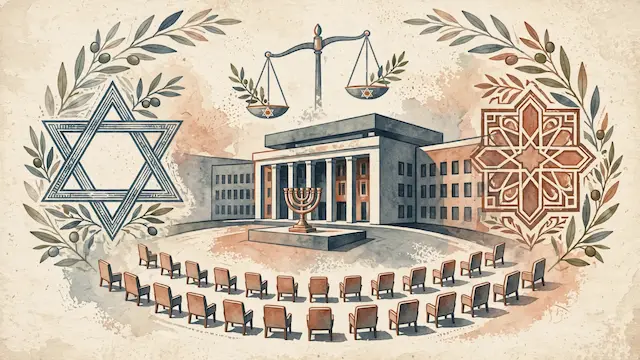
Following the recent elections, which saw Arab parties secure 19 Knesset seats, the issue of their participation in governing has re-emerged as a central political debate in Israel. This discussion centers on the extent of potential partnerships with Zionist parties and the possibility of translating Arab parliamentary influence into tangible power within decision-making bodies, a significant shift given a history of exclusion and conditional political engagement with Arab citizens.
A Walla news analysis traces the political trajectory of Arab parties in Israel since the state's inception in 1948. Initially, Arab citizens, numbering around 160,000 within Israel's borders, were subjected to military rule until 1966. Historian Hillel Cohen notes that the ruling establishment and the Shin Bet security agency exerted political and security control by supporting non-nationalist electoral lists and fostering ties with the ruling Mapai party, offering specific benefits in return. This era saw the rise of "affiliated parties" or "attached Arab lists," often based on family structures, which supported government coalitions for local interests. The Communist Party, led by Tawfiq Toubi, emerged as a significant opposition force against military rule and discrimination, notably exposing the 1956 Kafr Qasim massacre.
With the abolition of military rule in 1966, the 1967 war, and the 1976 Land Day events, Palestinian national identity among Arab citizens strengthened, leading to the gradual decline of affiliated lists. In the 1990s, a new model emerged during Yitzhak Rabin's 1992 government, which became a minority government. Six Knesset members from the Shas party withdrew, and the government relied on the external support of five Arab MKs from the Democratic Front for Peace and Equality and the Arab Democratic Party. This arrangement, known as the "blocking bloc," provided parliamentary security without formal participation or ministerial portfolios for the Arab parties. Former MK Abd al-Wahhab Darawshe stated that Arab parties sought fundamental changes in state treatment of the Arab community, particularly in budgets, infrastructure, and education, rather than ministerial posts. Researcher Ereke Rodnitzky observed that while this period saw increased budgets and improved civil relations, Arab parties remained outside official decision-making, a situation writer David Grossman described as Arabs being a "blocking bloc" rather than actual partners in governance.
The relationship between Arab citizens and the Israeli political establishment deteriorated sharply after the October 2000 events, where 12 Arab citizens and one Palestinian were killed by police, deepening anger and alienation and contributing to a low voter turnout of about 18% in the 2001 elections. The formation of the Joint List in 2015 revitalized political participation, securing 15 seats in the 2020 elections. Increased Arab voter turnout at that time drew opposition, including statements from then-Prime Minister Benjamin Netanyahu.
Political outreach to Arab parties was not limited to the center-left; the right also made attempts, particularly during the 2021 elections, when Netanyahu led a campaign to attract Arab voters, visiting Arab towns and using the moniker "Abu Yair." He also engaged in political discussions with Mansour Abbas, head of the United Arab List. Ultimately, political shifts led to the United Arab List joining the Bennett-Lapid government in 2021, marking the first time an independent Arab party signed a coalition agreement and officially participated in an Israeli government since the state's founding.
The United Arab List's participation sparked considerable debate within both Arab and Jewish communities. Some viewed it as a step towards influencing decision-making centers and achieving civil gains, while others saw it as a compromise of Palestinian national identity for budgets and allocations within a Zionist government. The government partnership reportedly led to the approval of a five-year plan exceeding 30 billion shekels for the Arab community, alongside resources for crime prevention and recognition of Bedouin villages in the Negev. However, Mansour Abbas faced criticism from other Arab parties, including the National Democratic Assembly, with former MK Sami Abu Shehadeh accusing him of making political concessions at the expense of Palestinian national identity.
With Arab parties now holding 19 seats in the 26th Knesset, the question of their government participation is back in the spotlight due to their significant parliamentary weight. The debate continues on whether this representation will translate into governmental partnership or remain within arrangements of external support. Yair Golan, leader of the Democrats party, has called for a "change government" of 67 MKs, including Arab parties, emphasizing equal voting rights. However, his center-left partners have expressed reservations, while Netanyahu and the right-wing bloc are campaigning against any government relying on Arab party support. The analysis concludes that the debate within the Arab community reflects diverse political trends, ranging from advocating for participation in governance to influence policy and budgets, to rejecting alignment with an Israeli government based on its political identity. The issue of partnership and recognition of Arab representation remains a key focus in the post-election political landscape.
Mentioned


