
Lieberman's Political Pivot: A Promise Broken After Ten Days
Translated & summarized from Maariv by baba
Avigdor Lieberman is reportedly willing to compromise on Haredi conscription ten days after the election, a reversal of his campaign pledge. This comes as other "change bloc" leaders explore minority government options, potentially with support from Arab parties. The article criticizes this flexibility, framing it as a betrayal of voter trust and questioning the basis of representative democracy when core promises are immediately discarded for political gain. The author cites psychological research on political loyalty and voter leniency towards their own camp's politicians.
The story in 5 lines · by baba
- Avigdor Lieberman is reportedly willing to compromise on Haredi conscription ten days after the election.
- The "change bloc" leaders are exploring minority government options, potentially with Arab party support.
- The article criticizes the flexibility of campaign promises as a betrayal of voter trust.
- Psychological research suggests voters are more lenient towards politicians from their own camp.
- The author questions the moral basis of representative democracy when core promises are reversed.
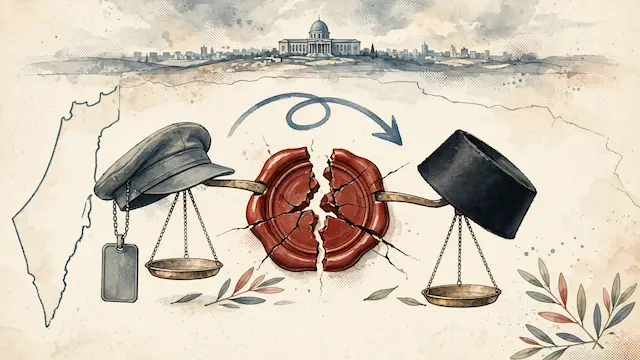
Ten days after the elections, Avigdor Lieberman appears ready to compromise on the issue of Haredi conscription, a significant shift from his campaign promises. This move comes as Gush Dan (the bloc aiming to replace Netanyahu) leaders are reportedly considering relying on Arab parties, a stance previously rejected by some within the bloc. Lieberman's willingness to form a government with the Haredim, even at the cost of a major compromise on the draft law, contrasts with earlier pledges to end Haredi draft evasion. Meanwhile, another bloc leader, Gadi Eisenkot, is reportedly exploring the possibility of a minority government supported from the outside or by abstentions from Arab parties. The article suggests that the "alliance of the servants," a term used for the bloc's supporters, is proving to be flexible, with campaign promises becoming bargaining chips in the pursuit of replacing Benjamin Netanyahu. The author questions the meaning of political promises when they can be so readily discarded after an election, referencing research on moral foundations and political psychology. Studies by Jonathan Haidt, Jesse Graham, and Brian Nosek suggest that while liberals prioritize care and fairness, conservatives place greater weight on group loyalty, authority, and sanctity. Further research by Alon Zoizner and Eran Amsalem indicates that voters are more lenient towards politicians from their own camp who break promises compared to those from opposing parties. This phenomenon, the article argues, helps explain the current political situation, where voters might overlook similar compromises from Lieberman that they would condemn if made by Netanyahu. The piece distinguishes between legitimate policy adjustments due to changing circumstances and the "art of deceiving trust" when explicit campaign pledges are reversed immediately after an election to gain power. The author contends that the foundation of representative democracy, built on trust between voters and elected officials, is undermined when core electoral promises are used as immediate bargaining tools, especially when the need for such compromises was known before the election.
Mentioned




