
Election Results Reveal Deep Fear and Hatred Between Israeli Political Camps
Translated & summarized from Arutz Sheva by baba
Israel's recent election ended inconclusively, highlighting deep fear and hatred between political camps, according to Rabbi Azriel Ariel. He urges the right to self-reflect and warns against fear-driven decisions, seeing the results as a chance for new leadership. The election atmosphere was dominated by mutual fears, from the left's concern over liberal values to the right's worries about the Jewish character of the state, and Arab and ultra-Orthodox anxieties. Rabbi Ariel calls for a sober assessment of the situation and responsible decision-making, suggesting the election marks the end of an old political era.
The story in 6 lines · by baba
- Recent Israeli election yielded no clear winner, revealing deep fear and animosity between political factions.
- Rabbi Azriel Ariel urges the right to examine its role in escalating national divisions.
- Voter motivation was primarily driven by fear across the political spectrum, from left to right.
- The election atmosphere was marked by mutual fear and intense hatred between opposing camps.
- Rabbi Ariel suggests the election signifies the end of an old political era, paving the way for new leadership.
- He cautions against letting fear dictate policy, advocating for responsible decision-making amidst uncertainty.
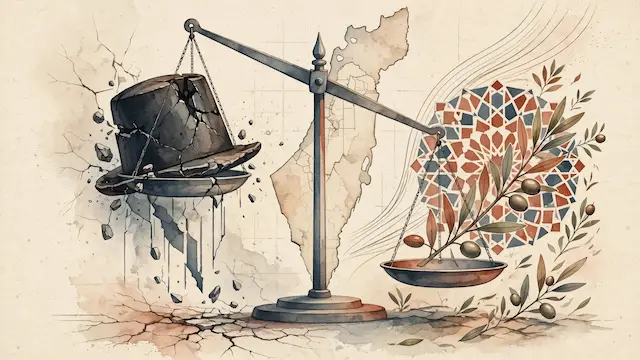
The recent Israeli election concluded without a clear victor, exposing the profound fear and animosity dividing the nation's political factions. Rabbi Azriel Ariel urges the right-wing to examine its role in exacerbating this division, cautioning against decisions driven by fear and suggesting the results present an opportunity for new leadership to emerge.
Reflecting on past election results, Rabbi Ariel shared thoughts from a synagogue, noting the difficulty in celebrating when nearly half the population feels devastated, not as in a sports loss, but as if their world has collapsed. He drew a parallel to how his community would feel if the results were reversed, advising then to "act with determination, speak with great sensitivity." These words resonate with the current election's inconclusive outcome, where neither the right nor the left can claim a decisive win, suggesting fear was the primary motivator for voters on both sides.
The election atmosphere was characterized by fear: the left feared another right-wing government undermining liberal values, leading to despair and thoughts of emigration. The right feared a left-wing-Arab coalition eroding the country's Jewish character, while Arab citizens feared further oppression by a right-wing government, and the ultra-Orthodox feared forced conscription into the IDF leading to widespread secularization. This fear drove left-wing voters and Arab citizens to extreme efforts to win, also drawing in parts of the political center.
Beyond fear, intense hatred between rival camps was evident. While public figures and media are often blamed for fueling this animosity, Rabbi Ariel points to the right-wing's contribution through aggressive rhetoric, provocative actions, prioritizing talk over quiet, practical work, and favoring forceful measures over consensus-building. He acknowledges justifications for such actions but insists the results necessitate a reevaluation.
Historical precedent shows that outcomes are unpredictable, with past right-wing governments failing to meet high hopes and feared left-wing governments having less severe impacts, while seemingly indifferent situations like the Rabin government and the Oslo Accords led to disaster. Rabbi Ariel advocates for a clear-eyed assessment of reality, identifying both dangers and hidden opportunities. He believes the nation is undergoing significant internal shifts post-war, affecting security perceptions, Jewish identity, and faith, which will eventually foster a new spirit, leadership, and political landscape. He views the current election as a swan song for the old system, paving the way for something new, but stresses the need for responsibility in the interim.
Short-term consequences of the election will be difficult, but Israel has overcome tougher challenges. The new reality demands tough decisions, balancing competing values. The article poses questions about pursuing new elections, risking further national division, or forming a unity government with ideological compromises, and where to draw red lines. Fear should serve as a warning against risks and a guide to minimize them, but not as a governing principle, likening it to an excellent quality inspector but a poor CEO.
Mentioned
The same event, reported separately by each outlet. Open a few to compare what different newsrooms emphasize — and what they leave out.
Right 1Other 1

Not the same event — other stories that share this one’s people, places, or theme: background, reactions, and follow-ups.




