
Israeli Attacks Worsen Gaza Displacement Crisis Amid Ceasefire Violations
Translated & summarized from Arab48 by baba
Israeli forces are violating a ceasefire in Gaza with ongoing attacks on residential areas and shelters, causing casualties and exacerbating the displacement crisis. Hundreds of thousands of displaced Palestinians face harsh winter conditions in damaged shelters with inadequate supplies. Humanitarian crises in food, water, and healthcare are deepening due to aid restrictions and funding shortages, leading to increased health risks. These violations persist despite a US-backed ceasefire roadmap announced in July 2026.
The story in 5 lines · by baba
- Israeli forces are violating the Gaza ceasefire with ongoing attacks, causing casualties and worsening the displacement crisis.
- Hundreds of thousands of displaced Gazans face severe winter conditions in inadequate shelters with limited supplies.
- Humanitarian crises related to food, water, and healthcare are deepening due to aid restrictions and funding shortages.
- UN warns of widespread health risks, with respiratory infections being the most common medical issue.
- The ongoing violations persist despite a US-backed ceasefire roadmap announced in July 2026.
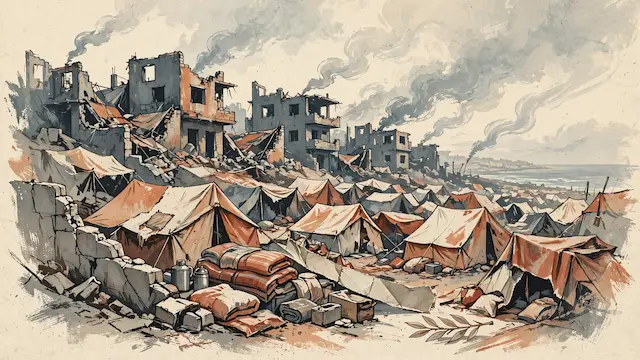
Israeli forces continue to violate the ceasefire agreement in the Gaza Strip through house demolitions, artillery shelling, and gunfire from military vehicles and drones. These attacks target residential areas, displaced persons' tents, and shelters, resulting in casualties. On Sunday, increased military activity was reported in various areas, including eastern Gaza City, the vicinity of Kamal Adwan Hospital, west of Beit Lahia, and eastern Hamad City in northern Khan Younis, with low-flying drones and reconnaissance aircraft observed over southern and eastern governorates. In the central Gaza Strip, a displaced person died from injuries sustained during a previous Israeli incursion in Al-Masdar village, east of Deir al-Balah. These actions persist despite 388 days having passed since the agreement's commencement.
The ongoing conflict exacerbates the displacement crisis as winter approaches. Hundreds of thousands of families are forced to live in dilapidated tents and damaged homes lacking basic protection. The United Nations warns that approximately 950,000 displaced individuals reside in areas prone to flooding, with over 400,000 in high-risk locations. Around 1.98 million people require shelter and essential aid. Restrictions on importing shelter supplies, equipment, and spare parts, coupled with funding shortages, hinder repairs to water and sewage systems and the preparation of displacement sites for rain.
UN estimates indicate that available supplies cover only 18% of the needs for 294,250 families preparing for the cold and rainy season. Thousands of damaged buildings remain a danger to their inhabitants. The food, water, and healthcare crises are also deepening due to reduced aid, difficulties in importing supplies, and rising prices for some goods. The UN Office for the Coordination of Humanitarian Affairs reported a drop in daily meal production to about 586,000 by late October, while flour and fresh produce prices increased by over 70% during a specified monitoring period. Bakeries and aid organizations face challenges in meeting demand.
The harsh living conditions and deteriorating water and sanitation services impact public health. UN data shows respiratory infections accounted for 60% of medical consultations between October 18-25, followed by skin diseases and acute watery diarrhea, indicating widespread health risks in overcrowded displacement camps. Despite former US President Donald Trump's announcement on July 31, 2026, of a "roadmap" for a ceasefire and the Palestinian factions' repeated acceptance, military violations and restrictions on aid continue to worsen the humanitarian catastrophe in Gaza.
Mentioned

