
Israel Prepares for War with Iran Amid Stalled Talks
Translated & summarized from Behadrei Haredim by baba
Israel is preparing for potential military conflict with Iran due to stalled negotiations and a belief that Tehran is unwilling to compromise. The IDF has completed high-level readiness for a campaign, but the decision rests with U.S. President Donald Trump, potentially influenced by the upcoming U.S. midterm elections. Diplomatic efforts, including Qatari mediation, are underway but have seen little progress. Meanwhile, Iran's Supreme Leader Mujtaba Khamenei has threatened to dictate terms of conflict and update target lists against the U.S. and Israel.
The story in 5 lines · by baba
- Israel assesses military conflict with Iran is more likely than a negotiated settlement.
- The IDF has completed extensive preparations for a potential military campaign against Iran.
- U.S. President Donald Trump's decision on military action may be influenced by the upcoming U.S. midterm elections.
- Diplomatic efforts, including Qatari mediation, are ongoing but have yielded no significant progress.
- Iran's Supreme Leader Mujtaba Khamenei has threatened to dictate terms of conflict and expand target lists.
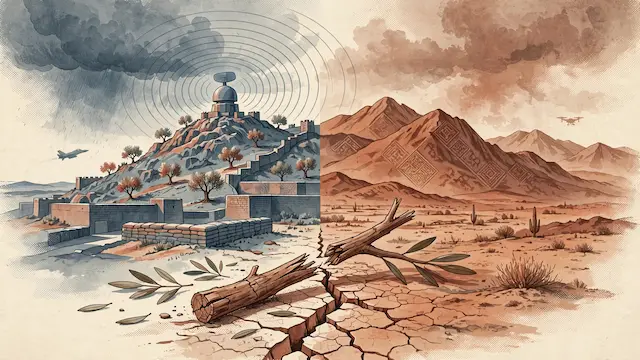
Israel is preparing for the possibility of renewed conflict with Iran, citing a stalemate in negotiations and the assessment that Tehran is not approaching a compromise. A senior Israeli official stated on Saturday evening that the likelihood of further military confrontation is higher than the chance of reaching an agreement, telling "Walla!" that "it seems we are more on the way to war than to an agreement." The Israel Defense Forces (IDF) have completed preparations for a potential campaign, encompassing both defensive and offensive measures, with a very high readiness level. However, the decision to launch a military operation hinges primarily on U.S. President Donald Trump, with Israeli assessments suggesting that the upcoming U.S. midterm elections could influence his decision. Jerusalem estimates that if Trump suffers a political setback in the elections, he might opt for a military action to demonstrate his strength. Israeli political and security leadership have also considered striking Iran's energy infrastructure to hasten the regime's collapse. Israel is also bracing for the possibility that the next conflict could be prolonged, extending beyond a few days of strikes. Concurrently, diplomatic efforts continue to prevent escalation. Qatar is attempting to broker a deal where Iran would take steps to limit its nuclear program and open the Strait of Hormuz, in exchange for the U.S. lifting sanctions and unfreezing Iranian assets. A Qatari delegation has already held talks in Tehran, with ongoing efforts involving Washington, but Israel sees no significant progress. An Israeli source familiar with the matter indicated that no party desires another war, especially Gulf states, but added, "But there is no choice, because the negotiations are stuck, especially now. Someone will have to compromise, and the Iranians are not on the way to a compromise." Israel is also considering the possibility that Iran might preempt a U.S.-Israeli strike by launching its own offensive. The Israeli source estimated, "If all conditions align, there will be an attack, if only to accelerate the regime's fall or the negotiations." Meanwhile, Tehran continues to issue threats. Supreme Leader Mujtaba Khamenei warned that in the event of an attack by Israel and the U.S., Iran would dictate the timing and terms for ending the fighting. In a statement following a meeting reportedly with senior Iranian military officials, Khamenei instructed that the target bank be updated to ensure "all tangible and intangible assets of the American-Zionist enemy (sic) are within the reach of Iranian forces." He also demanded that commanders prepare for a powerful confrontation and respond to any attack with a response not limited by geographical boundaries. Those reportedly present at the meeting included Commander of the Revolutionary Guards Ahmad Vahidi, Chief of Staff Ali Abdollahi, and Commander of Iran's Army Amir Hatami.
Mentioned



