Israeli Election Results Spark Regional and European Concerns Over Stability
Translated & summarized from Cursorinfo by baba
Israeli elections resulted in a deadlock, with no party securing a majority, leading to regional and international concerns. Benjamin Netanyahu and Gadi Eisenkot are vying to form a government, while President Isaac Herzog must decide who gets the mandate. The U.S., under President Donald Trump, is monitoring the situation, and European nations fear instability will impact regional issues like the Iran conflict and Gaza's humanitarian crisis. The Palestinian Authority hopes for renewed dialogue, but prospects remain uncertain amid ongoing regional tensions.
The story in 6 lines · by baba
- Israeli elections resulted in a deadlock, with no party securing a majority to form a government.
- Benjamin Netanyahu and Gadi Eisenkot are the main contenders to form the next Israeli government.
- The U.S., under President Donald Trump, is closely watching the coalition talks and potential for intervention.
- European nations are concerned about regional stability and the impact of the Israeli political crisis on issues like Iran and Gaza.
- The Palestinian Authority hopes for renewed dialogue with Israel after coalition talks conclude.
- The election results have led to heightened regional tensions and diplomatic discussions among various international actors.
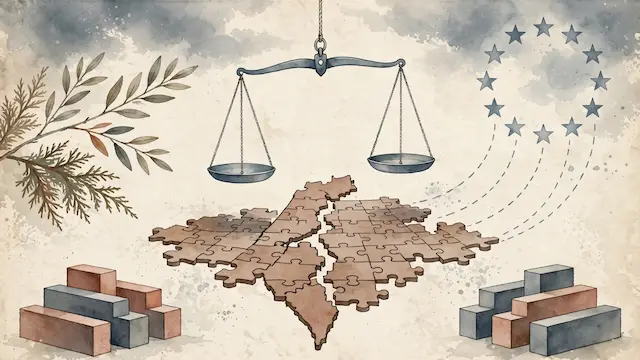
The recent Knesset elections in Israel have resulted in a political deadlock, with neither Benjamin Netanyahu's bloc nor his opponents securing a majority to form a government. This uncertainty has triggered reactions from the United States, European nations, and Middle Eastern countries concerned about regional security implications. The election saw Netanyahu's bloc win 53 seats, while parties opposing the current prime minister secured 48. An additional 19 seats went to the RAAAM and United List parties, unprecedented for them. A majority requires at least 61 seats, and deep political disagreements are hindering coalition talks.
President Isaac Herzog faces the task of deciding whom to task with forming the next government. Netanyahu will continue to lead the interim cabinet, potentially making crucial security decisions. U.S. President Donald Trump, who openly supported Netanyahu before the election, suggested his involvement helped Netanyahu achieve a better result than expected. However, Netanyahu's Likud party remaining the largest does not guarantee his continued leadership, as he needs to form alliances with former rivals.
Trump stated he had not considered intervening in coalition negotiations but would examine the possibility. The U.S. sees a broad coalition as a way to ensure Israeli stability amidst regional challenges, but Israeli parties show little willingness to compromise. A key U.S. concern is the confrontation with Iran, with the Trump administration considering further actions against Tehran amid potential large-scale military operations. This comes ahead of U.S. midterm elections on November 3rd.
Some analysts believe a change in Israeli government might not alter policy toward Iran. Jonathan Panikoff, a former senior U.S. intelligence official, suggests other Israeli leaders might also support strikes on Iranian targets if Trump decides to do so. Iran is reportedly preparing for renewed conflict, with President Masoud Pezeshkian ordering increased readiness. Foreign Minister Abbas Araghchi is engaged in diplomatic efforts to prevent escalation. Iranian commentators suggest a renewed conflict could shift domestic Israeli focus from the coalition crisis to national security, potentially aiding coalition formation.
European capitals are also discussing the election results. The European Union expressed readiness to work with the future government but fears the prolonged coalition formation will complicate decisions on regional issues, particularly concerning Iran and the Gaza Strip's humanitarian situation. France's Foreign Minister Jean-Noël Barrot affirmed Paris's continued support for Israeli security and the two-state solution, stating France would not delay its own diplomatic initiatives, including on settlements in the West Bank. He also noted the significant gains by Arab parties, which could influence coalition possibilities.
Germany is concerned about the protracted political crisis's impact on Gaza's humanitarian situation, with Development Minister Rim al-Abadi-Radovan urging humanitarian aid independent of coalition talks. German politician Juergen Hardt expressed a preference for a more centrist Israeli government, suggesting Arab parties might facilitate an Eisenkot-led cabinet with external support, though he stressed the final decision rests with Israeli representatives.
European experts like Beth Oppenheim of the European Council on Foreign Relations speculate Netanyahu might use the uncertainty for expanded military activity. They urge intensified diplomatic efforts with the U.S. and Arab nations to prevent regional escalation. Palestinian Authority Chairman Mahmoud Abbas hopes for renewed dialogue with Israel post-coalition talks and proposed Cyprus as a mediator. However, prospects remain uncertain, as even Eisenkot opposes a Palestinian state, though his approach differs from Netanyahu's.
Other Arab nations are not optimistic, believing even a moderate Israeli government won't fundamentally change policies toward Palestinians, Syria, or Lebanon. However, the absence of far-right parties could ease diplomatic processes with Syria and discussions on Israeli military presence in southern Lebanon. Normalization with Saudi Arabia, linked to progress on the Palestinian issue, remains uncertain. Qatar has denied accusations of election interference, calling them an attempt to draw Doha into internal Israeli conflict.
French commentator Alain Perchot noted significant differences between Netanyahu and Eisenkot regarding democratic institutions, settlements, and Palestinian relations, suggesting an Eisenkot government could improve ties with Western partners, though this is a personal view. Turkey has expressed disappointment with the election results.
Mentioned
The same event, reported separately by each outlet. Open a few to compare what different newsrooms emphasize — and what they leave out.
Left 1Centre 3Other 2





Not the same event — other stories that share this one’s people, places, or theme: background, reactions, and follow-ups.