
Binance Hack Raises Questions About Crypto Security and Sanctions Evasion
Translated & summarized from N12 by baba
A major hack on Binance, the world's largest crypto exchange, has frozen about $3 billion in assets, raising concerns about digital currency security and its use for sanctions evasion. The incident occurs shortly after Israeli Prime Minister Benjamin Netanyahu proposed using crypto to bypass sanctions, an idea the Bank of Israel rejected. Experts note the difficulty in recovering stolen crypto, while Binance has pledged to cover losses. The attack has been tentatively linked to North Korean hackers.
The story in 6 lines · by baba
- Binance, the world's largest crypto exchange, suffered a major hack, freezing approximately $3 billion in assets.
- The breach raises questions about crypto security and its potential use for sanctions evasion.
- Israeli Prime Minister Benjamin Netanyahu had recently proposed using crypto to bypass sanctions.
- The Bank of Israel has stated that cryptocurrencies cannot serve as a bypass for sanctions.
- Binance has pledged to cover all losses incurred by users due to the hack.
- The attack has been tentatively attributed to North Korean hacker group TraderTraitor.
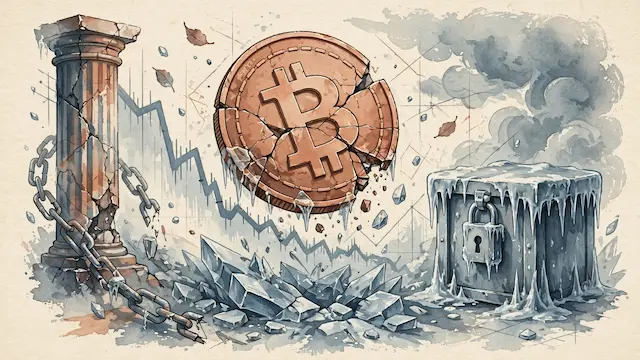
A massive cyberattack on Binance, the world's largest cryptocurrency exchange, has raised significant questions about digital asset security and the feasibility of using crypto for sanctions evasion, particularly in light of recent Israeli government discussions. The breach, which occurred between Thursday and Friday, has led to the freezing of approximately $3 billion in assets, though billions more may remain inaccessible to the attackers. The full extent of the stolen funds is still under investigation.
The incident gains particular relevance in Israel, coming just a week after Prime Minister Benjamin Netanyahu revealed plans for a state strategy to utilize cryptocurrencies and blockchain technology to circumvent potential banking sanctions. This initiative stemmed from Netanyahu's concerns about Israel's economic relations with other countries. However, the Bank of Israel quickly distanced itself from the idea, stating that cryptocurrencies cannot serve as a bypass for sanctions.
Experts highlight that while crypto facilitates transfers outside the traditional banking system, controlling, protecting, and recovering stolen assets presents major challenges. Ilan Shtark, CEO of Horizon at Altshuler Shaham, explained that a key issue in using crypto for transactions with sanctioned entities is the inability of the receiving party, bound by local regulations, to accept such payments. He cited instances where his company refused requests to use digital currencies for transactions involving Belarus and Russia due to these regulatory hurdles.
Binance announced it would cover all losses through its SAFU fund and company assets. The exchange stated that no evidence of private key leaks has been found and a detailed technical report will follow the investigation. Initial findings suggest the breach may have involved a compromised laptop of a DevOps engineer, granting unauthorized access. Blockchain analysis firms TRM Labs and Chainalysis have attributed the attack to North Korean hacker group TraderTraitor, though this remains an assessment by private companies.
The hack underscores the inherent tension in cryptocurrency: its ability to operate outside traditional finance can be advantageous for those seeking to avoid sanctions, but it simultaneously creates risks in security, oversight, and asset recovery. While some digital assets can be frozen due to their technological design, others are intentionally built to prevent any central body from freezing accounts, making recovery after theft more complex.
Mentioned


