
Report: Trump May Launch Strikes on Iran Post-Midterm Elections
Translated & summarized from Kan News by baba
The Trump administration is reportedly preparing for potential strikes against Iran shortly after the U.S. midterm elections, a move that has raised concerns among Gulf allies. Simultaneously, diplomatic efforts are underway, with Qatari mediators facilitating talks between the U.S. and Iran to prevent military escalation. A draft proposal reportedly includes confidence-building measures and a path toward direct negotiations on Iran's nuclear program and sanctions relief. However, internal divisions within the U.S. administration and differing regional pressures, including from Israeli Prime Minister Benjamin Netanyahu, complicate the situation.
The story in 5 lines · by baba
- U.S. may launch strikes on Iran post-midterms, briefing Gulf allies on potential November 4 attacks.
- Diplomatic efforts are ongoing, with Qatar mediating talks for direct U.S.-Iran negotiations.
- A draft proposal includes confidence-building measures and a path to discuss Iran's nuclear program.
- Internal U.S. government divisions exist regarding engagement with Iran.
- Regional leaders, including Netanyahu, have differing views on military action versus diplomacy.
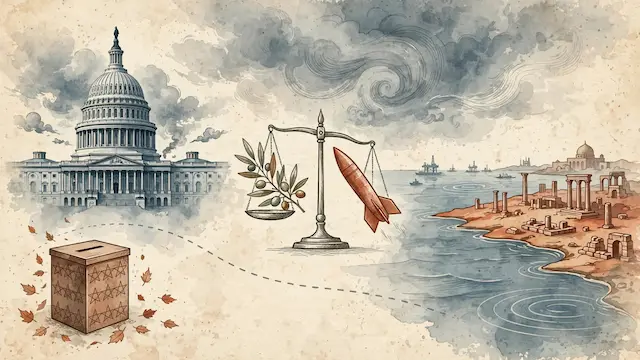
The Trump administration has briefed its Gulf allies to prepare for a short, intense round of strikes against Iran, potentially beginning on November 4, the day after the U.S. midterm elections. This report, citing three senior Arab Gulf officials, indicates that Gulf allies are pushing for de-escalation and expressing concerns about an Iranian response, including threats to shipping in the Strait of Hormuz. One official suggested some Gulf states might refuse to allow strikes from their territory. The White House has not officially confirmed specific military plans but stated that all options are on the table to prevent Iran from acquiring nuclear weapons.
In parallel, the U.S. has dispatched a third naval fleet to the Middle East, led by the aircraft carrier USS Theodore Roosevelt, with approximately 9,000 personnel. This fleet is expected to arrive in late November. Additional Patriot missile batteries have been sent to Saudi Arabia and Qatar, and personnel have been reduced at U.S. missions in Lebanon, the UAE, Qatar, and Jordan.
Amidst the threats of renewed conflict, diplomatic efforts continue. Vice President J.D. Vance sent a letter to Iran's General Mohsen Rezaei, Secretary of the Supreme National Security Council, proposing a meeting to resume talks. Qatari mediators returned to Tehran on Friday with a seven-day confidence-building proposal, with envoys Jared Kushner and Steve Witkoff involved in the discussions. Axios reported that Qatari mediators held over 12 hours of talks in Tehran aimed at advancing an agreement for direct U.S.-Iran negotiations and preventing military escalation after the midterms. These talks are expected to continue in Doha, with diplomatic sources reporting positive progress.
Qatar is pushing for an agreement on mutual steps leading to direct talks on the nuclear program and other issues. Key obstacles remain: the U.S. demand for Iranian nuclear concessions as a prerequisite for talks, and Iran's demand for the lifting of the naval blockade, release of frozen funds, and permission to sell oil. The draft proposal reportedly includes Qatari efforts to persuade Iran to allow UN inspectors to visit nuclear sites as a confidence-building measure, in exchange for U.S. sanctions relief. Reports also indicate internal U.S. government divisions, with Secretary of Defense Hagest and Secretary of State Rubio reportedly skeptical of an agreement with the current Iranian regime, favoring further weakening through additional strikes. Conversely, Vice President Vance and envoys Witkoff and Kushner support resuming negotiations. President Trump himself is reportedly skeptical of Iran agreeing to a deal, while Treasury Secretary Scott Bassant encourages continued economic pressure. Regional countries, including Saudi Arabia and Turkey, are urging Trump to allow more time for diplomacy. However, Israeli Prime Minister Benjamin Netanyahu is reportedly pushing for a joint attack immediately after the elections. One U.S. official speculated that Trump might lean towards military action if Republicans lose the midterms, though the White House denied that election results would influence the decision.
A draft proposal obtained by Saudi channel Al-Arabiya reportedly includes an early review of Iran's nuclear arsenal commitments and discussions on reopening the Strait of Hormuz within seven days. Daily discussions on mutual trust-building measures between Tehran and Washington are also part of the draft. It also explores an international mechanism to ensure compliance by both the U.S. and Iran, and considers a potential role for China as a guarantor. The draft aims for Iran's agreement to direct negotiations with the U.S., with reciprocal actions on sanctions for any Iranian nuclear steps. It also outlines measures to address potential Iranian non-compliance or delays.
Mentioned



