
Global Port Strike Threatens Arms Supplies to Israel
Translated & summarized from Cursorinfo by baba
An international 24-hour strike by port workers on October 30 disrupted military supply routes to Israel, involving 113 ports in 22 countries. Organized by unions, the action aimed to stop the use of civilian infrastructure for arms transport, with a specific focus on shipments to Israel. Protesters also called for an end to military cooperation and arms exports to Israel. The strike's impact on specific arms deliveries remains unconfirmed.
The story in 5 lines · by baba
- International port workers in 22 countries struck on October 30, disrupting military supply routes to Israel.
- The 24-hour strike involved 113 ports, with participants demanding an end to using civilian infrastructure for arms transport.
- Organizers claimed the action affected 40 percent of Mediterranean cargo and estimated $2 billion in losses for arms traders.
- Pro-Palestinian activists and the BDS movement joined the union-led protests against arms shipments to Israel.
- The strike is based on the May 2026 Istanbul Declaration, calling for a ban on civilian ports for arms delivery to conflict zones.
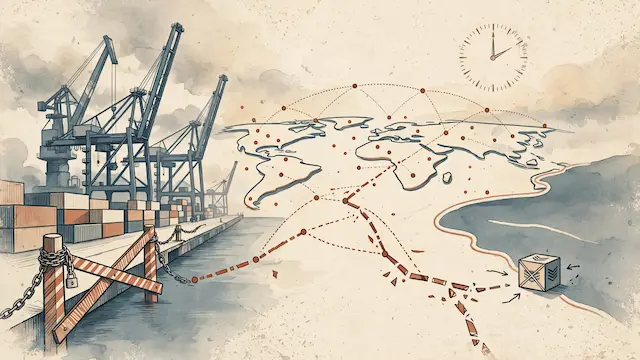
An international strike by port workers on October 30 disrupted maritime terminals and supply routes for military goods to Israel. Organized by international trade unions, the 24-hour action involved 113 ports in 22 countries, with participants blocking access and demanding an end to the use of civilian infrastructure for transporting weapons and military equipment. Organizers claimed the strike affected approximately 40 percent of cargo traffic in the Mediterranean and estimated financial losses for arms traders at around $2 billion, though this figure lacks independent confirmation.
The initiative was spearheaded by port worker unions in Italy, France, Greece, Spain, Turkey, and Morocco, later joined by organizations from other nations. Major European ports like Genoa, Marseille, Le Havre, Hamburg, Valencia, Trieste, and Piraeus saw significant protests, with some participants blocking access roads to port facilities. While the stated goal was to prevent the use of civilian ports for military cargo and personnel, a primary focus was countering arms shipments to Israel.
Pro-Palestinian activists, student groups, and the BDS movement joined the union actions, along with organizations linked to the "Global Sumud Flotilla" campaign. Demonstrators accused Israel regarding the Gaza war and urged European nations to cease military cooperation and restrict arms exports. In Greece's Piraeus port, Markos Bekris, chairman of the ENEDEP union federation, stated that civilian terminals should not be used for military cargo, as port workers do not wish to facilitate armed conflicts.
Organizers described the strike as an independent effort to impose arms supply restrictions, calling it a form of humanitarian embargo primarily targeting military cooperation with Israel. They asserted that maritime transport accounts for about 90 percent of weapons arriving in Israel, justifying their strategy of blocking port infrastructure. However, the exact amount of military cargo destined for Israel that was actually delayed remains unconfirmed, with no specific details on disrupted shipments or their duration provided.
The international campaign is based on the Istanbul Declaration, adopted in May 2026 by port worker unions from 35 European countries, which calls for a ban on using civilian ports for delivering weapons to conflict zones.
Mentioned
The same event, reported separately by each outlet. Open a few to compare what different newsrooms emphasize — and what they leave out.
Centre 2Other 1



Not the same event — other stories that share this one’s people, places, or theme: background, reactions, and follow-ups.
