
Turkish Naval Drones Challenge Submarine Stealth, Sparking Israeli Concern
Translated & summarized from i24NEWS by baba
Turkey's "Sea Wolf 2026" naval exercise demonstrated a new capability using Bayraktar TB3 drones to detect submarines via acoustic buoys and real-time data analysis. This inexpensive robotic sensing system challenges the stealth of Israel's Dolphin-class submarines. Combined with indigenous torpedoes and missiles, this development signals a shift towards networked naval warfare, raising significant concerns for Israel's maritime security.
The story in 6 lines · by baba
- Turkish Bayraktar TB3 drones deployed acoustic buoys to detect submarines during naval exercises.
- The drones analyze underwater sounds in real-time, relaying data to warships for potential attacks.
- This capability challenges the stealth of Israel's Dolphin-class submarines.
- Turkey also demonstrated indigenous heavy torpedoes and cruise missiles.
- The development signifies a shift towards networked, robotic naval warfare.
- Israeli defense officials are increasingly concerned about Turkey's maritime advancements.
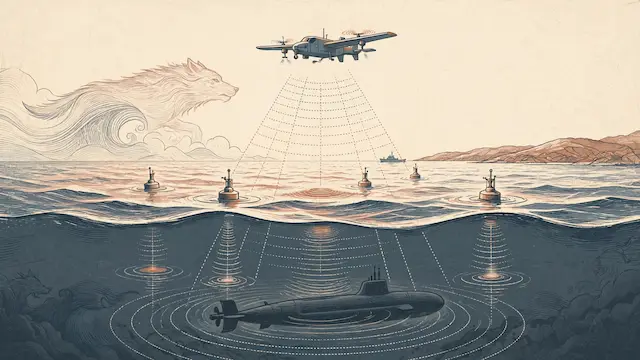
Turkey's recent naval exercises, particularly the "Sea Wolf 2026" drill, have raised significant concerns in Israel regarding Ankara's growing maritime capabilities. The core of the worry stems from Turkey's development of inexpensive, robotic sensing systems designed to detect submarines, a capability that directly challenges the stealthy nature of Israel's Dolphin-class submarines. During the September 22nd exercise, a Turkish Bayraktar TB3 drone, equipped with a data processing computer, deployed acoustic buoys into the Mediterranean Sea. This drone analyzed the underwater sounds in real-time, synchronizing the data with an accompanying manned maritime patrol aircraft. This demonstration showcased how a low-cost drone can function as an airborne acoustic laboratory, attempting to 'hear' submarines from above.
This development is seen as an asymmetric approach, akin to how cheap drones challenged heavy tanks on land. Turkey is creating a cheap robotic sensing envelope to counter expensive strategic submarines. While the TB3 drone itself is limited in payload and did not engage in direct attacks, its role as a persistent, inexpensive sensor is crucial to Turkey's evolving naval doctrine. The data gathered by the drone is relayed in real-time to manned patrol aircraft and surface combat ships, which then carry the necessary weaponry to neutralize a detected threat.
Further compounding Israeli concerns is Turkey's progress in indigenous weapon systems. In a June exercise, the Turkish navy demonstrated its first domestically developed heavy torpedo, the AKYA, launched from the German-designed Sakarya submarine. Additionally, a cruise missile, the ATMACA, successfully hit a target 102 kilometers away. The combination of advanced aerial sensing capabilities, exemplified by the TB3 drone's acoustic monitoring, and the demonstrated firepower of systems like the AKYA torpedo and ATMACA missile, signals a shift towards a networked, distributed warfare model. This transition from traditional naval warfare to a system of interconnected, inexpensive robotic sensors linked to local armaments poses a significant challenge to the operational security of Israel's submarine fleet, which relies heavily on absolute stealth.
The same event, reported separately by each outlet. Open a few to compare what different newsrooms emphasize — and what they leave out.
Coverage from i24NEWS
