
Israel Faces Political Stalemate, Urged to Seek Unity
Translated & summarized from Arutz Sheva by baba
Israel is in a political stalemate after five elections, with the public seeking unity despite extremist polarization. The author urges elected officials to form a consensus committee to rebuild trust, warning that internal divisions weaken national security. He calls for a broad-based government and encourages media and individuals to foster connection and fraternity, emphasizing that Israel's future depends on unity.
The story in 5 lines · by baba
- Israel faces a political stalemate after five elections, with the public desiring consensus.
- The author urges politicians to form a consensus committee to rebuild trust and unity.
- Internal divisions are compared to the security failures preceding the October 7th attacks.
- A broad consensus government is advocated for its lasting impact over narrow majorities.
- Media and individuals are called upon to foster connection and fraternity among Israelis.
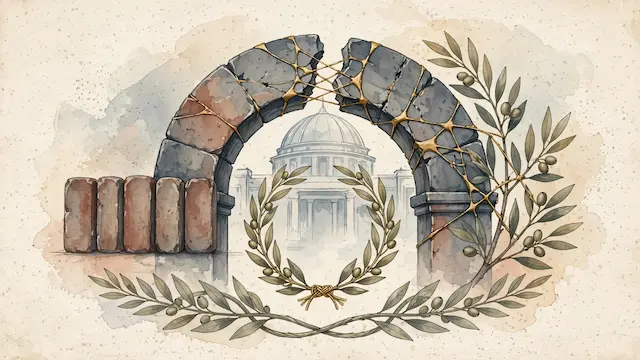
Following five consecutive elections, Israel remains in a political stalemate, with the public largely desiring consensus while extremist factions fuel division and fear. The author, Rabbi Shai Pardo of the Ofra settlement, argues that elected officials must cease seeking defectors and instead establish a committee for consensus to rebuild trust before external threats force national unity.
Pardo contends that recent election results were a tie, and those claiming otherwise are misleading themselves or others. He criticizes pollsters for telling the public what it wants to hear, a pattern that has persisted for years. While acknowledging external involvement in the voting of Israeli Arab citizens, he stresses that this was not the primary factor in the election's outcome, but rather highlighted the significant power of this demographic. He suggests this election could serve as a wake-up call for Israelis to act based on this real power, rather than illusions.
The author draws a parallel between internal political divisions and the security failures leading up to the October 7th attacks, warning that internal strife weakens national defense. He emphasizes that Israel has no other land or people, and its future depends on the unity of all its tribes.
He calls for a broad consensus government, suggesting that while a narrow majority government might make decisive moves, its decisions lack deep roots. A government built on wide agreement, though slower to decide, will have more lasting impact. He urges politicians to start with smaller, achievable goals, like forming a consensus committee, and to operate with principles of honesty, transparency, and a commitment to agreement.
Pardo also appeals to the media to foster a positive environment for reconciliation and to focus on areas of unity, such as reserve duty, volunteerism, and public service. He encourages individuals to strengthen personal connections, engage in dialogue with those who hold different views, and promote fraternity and closeness, ultimately aiming for peace and unity among all Israelis.



