
Ultra-Orthodox Protest Erupts in Clashes, Police Use Tear Gas, 3 Officers Injured
Translated & summarized from Ynet by baba
Dozens of extremist ultra-Orthodox protesters clashed with police near Highway 4, blocking roads and throwing stones, leading to injuries on both sides. National Security Minister Itamar Ben-Gvir criticized the Police Commissioner's handling of the situation, while other politicians condemned the police's use of force. The protest was sparked by the arrest of a draft dodger and involved groups known for their militant stance against military conscription.
The story in 6 lines · by baba
- Dozens of extremist ultra-Orthodox protesters clashed with police, resulting in injuries to three officers.
- National Security Minister Itamar Ben-Gvir accused the Police Commissioner of appeasing the next government.
- Protesters blocked roads, threw stones, and waved signs against military conscription.
- A news crew was attacked during the protest, with a reporter injured.
- The protest was in response to the arrest of a draft dodger, Alon Smadja.
- Ultra-Orthodox factions criticized Minister Ben-Gvir's actions and the police's use of force.
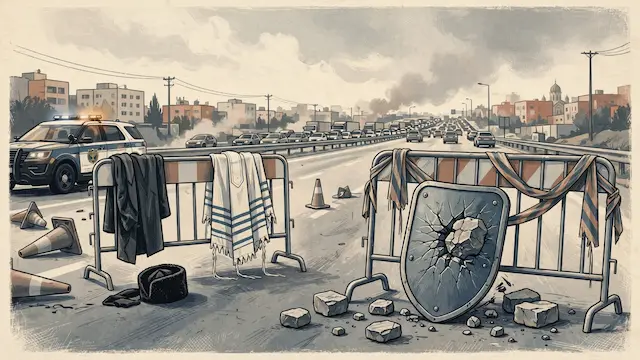
Dozens of extremist ultra-Orthodox men blocked the Geha interchange near Highway 4 in protest of a draft dodger's arrest. The demonstrators sat on the road and clashed with police attempting to clear them. The dispersal became aggressive, involving the use of stun grenades. One police officer was injured in the head by a thrown stone, and the police later reported two more officers were injured, including one who suffered broken ribs. Amidst the unrest, National Security Minister Itamar Ben-Gvir attacked Police Commissioner Dani Levy, accusing him of trying to appease the next government and Yair Golan. Ben-Gvir claimed the "bizarre scenes" at Geha interchange were part of Levy's new agenda to curry favor with the left.
In preparation for the protest, police had blocked Highway 4 northbound at the Aluf Sde interchange. After blocking the interchange, the protesters also blocked train tracks in the Petah Tikva area. Demonstrators sat on the road, waved signs reading "Better to die as an ultra-Orthodox Jew than live as a secular one, we will not be drafted!" and "Israel is an antisemitic country," and clashed with police. The police declared the protest illegal and began removing participants. During the dispersal, dozens of stun grenades were thrown at the rioters, and officers used batons, resulting in injuries to several protesters. A news crew from i24News was also attacked, with protesters allegedly throwing stones and hitting a reporter in the head, and assaulting a cameraman with an iron rod.
The police stated that while they respect the right to protest within legal boundaries, they will not permit public disorder or endangerment. United Torah Judaism Chairman MK Yaakov Asher condemned the violence, calling the images of injured protesters "a red line" and demanding an immediate hearing for the officers involved. Shas also issued a statement condemning the "shocking violence" and calling for an immediate investigation.
Sources within the Jerusalem Faction criticized Minister Ben-Gvir, accusing him of using the police for revenge after the election results and stating "ultra-Orthodox blood is not cheap." Ben-Gvir himself sharply criticized the Police Commissioner, stating Levy, who had previously fulfilled his requests, was now acting illegally against the ultra-Orthodox community as a "punching bag" the day after the elections. This statement comes as a final decision is pending on a petition to the High Court of Justice regarding Ben-Gvir's alleged interference in police operations.
The protests began over the arrest of Alon Smadja, who is serving a sentence for failing to report for military service. Smadja was arrested as part of a "ruse" by military police. The protesters belong to the "Ratzpanim" group, followers of Rabbi Tzvi Friedman, a more militant faction within the Jerusalem Faction. Last week, Friedman instructed his followers not to vote in the Knesset elections.
Mentioned
The same event, reported separately by each outlet. Open a few to compare what different newsrooms emphasize — and what they leave out.
Centre 2Right 2Arab 2Other 2







Not the same event — other stories that share this one’s people, places, or theme: background, reactions, and follow-ups.

