
Israeli President Navigates Complex Government Formation Amid Political Stalemate
Translated & summarized from Mako by baba
Israeli President Isaac Herzog is tasked with forming a government after inconclusive elections, a process that historically involves securing 61 Knesset member recommendations. Drawing on past precedents like the 2009 election, Herzog aims to prevent further elections by consulting all parties. While he has not explicitly called for a unity government, his focus on stability has sparked debate about potential compromises. The president has a strict timeline to assign the mandate, with failure leading to new elections.
The story in 5 lines · by baba
- President Isaac Herzog is tasked with forming a government following inconclusive Israeli elections.
- The president will consult with parties to determine who can best assemble a 61-member Knesset coalition.
- Herzog aims to prevent new elections, a scenario he considers the worst-case outcome.
- Historical precedents, like the 2009 election, show recommendations, not just party size, are crucial.
- The process involves strict timelines, with failure to form a government leading to new elections.
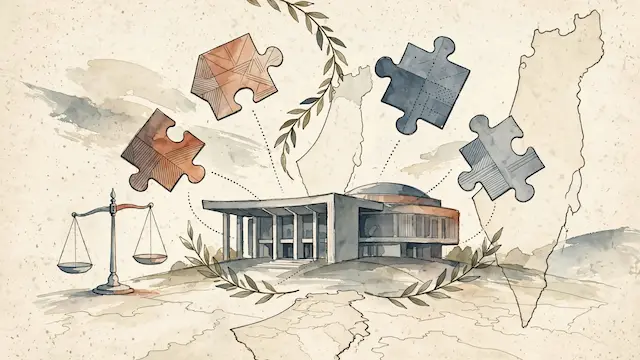
Following an inconclusive election, the responsibility for forming a government has fallen to Israeli President Isaac Herzog. The president's role involves extensive consultation with party leaders to determine who has the best chance of assembling a coalition that can win a Knesset majority. This process mirrors challenges faced in past elections, notably in 2009 when Shimon Peres, then president, navigated a similar deadlock.
In 2009, despite Tzipi Livni's Kadima winning one more seat than Benjamin Netanyahu's Likud, Netanyahu ultimately received the mandate to form a government after securing the recommendation of 61 Knesset members, including Avigdor Lieberman's Yisrael Beiteinu. This historical precedent highlights that the number of recommendations, rather than just the size of a party, is a crucial factor, though not the sole determinant. Legal experts emphasize that the president's discretion narrows significantly if a candidate can demonstrate 61 Knesset members' support.
President Herzog has publicly stated his commitment to preventing another election, viewing it as the worst-case scenario. He plans to consult with all factions after the official results are finalized. While not explicitly calling for a unity government, his emphasis on avoiding repeat elections has led to speculation about his potential willingness to push for such a coalition, even if it means parties must compromise on campaign promises. However, leaders like Gadi Eisenkot and Yair Lapid have expressed skepticism or outright opposition to a unity government led by Netanyahu.
The article delves into the intricacies of the presidential consultations, drawing parallels to past presidents' interventions. It notes that these discussions are not merely technical but involve probing parties' willingness to compromise. The transparency brought by cameras in the President's Residence has been credited with reducing suspicion of backroom deals but has also turned consultations into a public political stage.
Potential outcomes include a minority government, which requires external support to pass votes, or a protracted period of negotiations. The timeline for government formation is strict, with the president having seven days to assign the mandate, followed by 28 days for the candidate to form a government, extendable by 14 days. If the first candidate fails, the mandate can be transferred to another MK, or the Knesset can attempt to form a government itself within 21 days. Ultimately, if no government is formed, new elections will be called. The process is fraught with pressure on the president from all sides to either facilitate a unity government or avoid further elections, with potential external influence, such as from US President Donald Trump, also being a factor.
Mentioned
The same event, reported separately by each outlet. Open a few to compare what different newsrooms emphasize — and what they leave out.
Centre 2Arab 2Other 2






Not the same event — other stories that share this one’s people, places, or theme: background, reactions, and follow-ups.



