
Kfar Qasim Marks 70th Anniversary of 1956 Massacre
Translated & summarized from Makan by baba
Kfar Qasim is marking the 70th anniversary of a 1956 massacre committed by Border Police. Events include a morning march and an evening festival, with the municipal council approving related activities. The mayor highlighted the event's national and historical importance, emphasizing the need to preserve the martyrs' memory. The Higher Committee called for broad participation in the commemorations.
The story in 5 lines · by baba
- Kfar Qasim is commemorating the 70th anniversary of a 1956 massacre by Border Police.
- Events include a central march starting at 8:30 AM and a national festival at 6:00 PM.
- The municipal council approved organizing the march and related cultural activities.
- Mayor هيثم طه stressed the national and historical significance of the commemoration.
- The Higher Committee called for collective participation to preserve the memory of the martyrs.
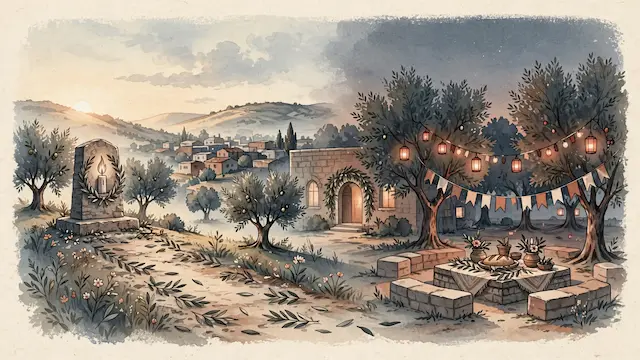
The city of Kfar Qasim is commemorating the 70th anniversary of a massacre that occurred in 1956, carried out by Border Police forces. The commemoration events, initiated by the Popular Committee and the Commemoration Committee, include a central march and a national festival. The traditional march began at 8:30 AM from the Abu Bakr Al-Siddiq Mosque square, while the national festival is scheduled for 6:00 PM next to Al-Hayat School. The municipal council had approved the organization of the march during an emergency session dedicated to preparing for the occasion. They also approved the publication and distribution of a book titled "Resilience Despite Wounds," the restoration of the Martyrs' Panorama at the Community Center, and a festival evening in the mountain area behind Al-Hayat School. The mayor, هيثم طه, emphasized that commemorating the anniversary carries national, historical, and humanitarian dimensions, stressing that the occasion goes beyond organizing events to encompass the responsibility of preserving the memory of the martyrs and conveying their message to future generations. The Higher Committee clarified that the timing and location of the national festival were determined after deliberations and preparations that considered the special significance of the 70th anniversary. The committee called on institutions, forces, various factions, and the city's residents to participate in the events and contribute to the festival's success, affirming that commemorating the anniversary is a collective responsibility requiring unified efforts to embed the memory of the massacre in collective consciousness and preserve the legacy of its martyrs.

