
Israeli President Urges Against New Elections Amidst Political Stalemate
Translated & summarized from Vesty by baba
Israeli President Isaac Herzog is urging against repeat elections following a vote that left no bloc with a clear majority. Preliminary results show Netanyahu's bloc with 53 seats and Eisenkot's with 48, with official results due November 4. Herzog will consult factions before tasking a candidate with forming a government, a process that has strict deadlines and can lead to new elections if unsuccessful.
The story in 5 lines · by baba
- President Isaac Herzog stressed the need to avoid repeat elections after the latest vote failed to produce a majority.
- Preliminary results show Netanyahu's bloc with 53 seats and Gadi Eisenkot's bloc with 48 seats.
- Official election results will be delivered to President Herzog on November 4.
- The President will consult with all factions before assigning the task of forming a government.
- The process for forming a government has strict deadlines, with failure potentially leading to new elections.
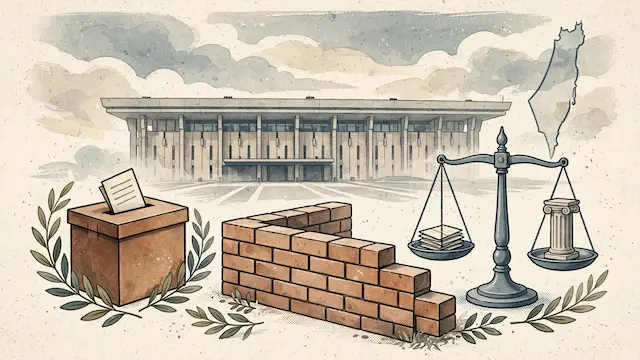
Israeli President Isaac Herzog stated on Wednesday, October 28, that all efforts must be made to avoid repeat elections, as the recent vote has not yielded a majority for any bloc. Herzog reiterated his stance, previously expressed before the elections, emphasizing the need for unconventional thinking from political leaders following the high voter turnout, which he described as a testament to Israeli society's commitment to democracy.
Official election results are expected to be delivered to President Herzog by Noam Solberg, Chairman of the Central Election Commission and Deputy President of the Supreme Court, on Wednesday, November 4. However, preliminary data from 93% of polling stations indicates that Netanyahu's bloc is projected to win 53 seats, Gadi Eisenkot's bloc 48, and Arab parties 19, excluding votes from double envelopes.
The President plays a crucial role in the post-election process by deciding whom to task with forming a government. While this could be Prime Minister Benjamin Netanyahu, Gadi Eisenkot, or another candidate, Herzog's office indicated a preference to await official results before beginning consultations with all factions. Unofficial contacts may begin as early as Friday, October 30, with formal faction visits commencing after November 4.
The process for forming a government involves a 28-day mandate, extendable by 14 days, for the first candidate. If this candidate fails, the mandate can be given to another. Should no candidate succeed in forming a government within the allotted timeframes, the Knesset can vote to dissolve, triggering new elections within 90 days. The President may also propose a national unity government if other attempts fail.
The same event, reported separately by each outlet. Open a few to compare what different newsrooms emphasize — and what they leave out.
Left 1Centre 4Right 4Haredi 2Arab 1Other 3



















Not the same event — other stories that share this one’s people, places, or theme: background, reactions, and follow-ups.

