
Israeli Markets Plunge Amid Election Uncertainty and Unclear Results
Translated & summarized from i24NEWS Arabic by baba
Israeli stock markets and the Shekel experienced a sharp decline on Wednesday following the Knesset elections, driven by uncertainty over the results and government formation. The "Tel Aviv 90" index fell over 3% and the Shekel weakened against the dollar and euro. Preliminary results show no clear majority for any bloc, suggesting prolonged coalition talks. Historical data indicates that market performance after elections can recover, but current trends are also influenced by broader economic and security factors.
The story in 5 lines · by baba
- Israeli stock indices and the Shekel fell sharply on Wednesday after the Knesset elections due to political uncertainty.
- The "Tel Aviv 90" index dropped over 3%, the "Tel Aviv 125" index fell 2%, and the "Tel Aviv 35" index lost 1.5%.
- The Shekel depreciated against the dollar, rising to 3.09 Shekels, and against the euro, trading above 3.43 Shekels.
- Preliminary election results show no clear majority, indicating potential for lengthy coalition negotiations.
- A study suggests market performance can recover post-election, but current trends are influenced by various factors.
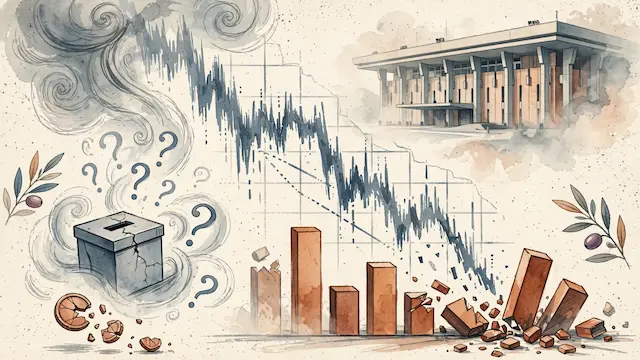
Tel Aviv's stock exchange experienced sharp declines in its first trading session following the Knesset elections on Wednesday. The Israeli Shekel also depreciated against the US Dollar and Euro, reflecting ongoing uncertainty about the election outcomes and the formation of the next government. The "Tel Aviv 90" index dropped over 3% in morning trading, while the "Tel Aviv 125" index fell by approximately 2%. The main "Tel Aviv 35" index opened down about 1.3%, widening its losses to around 1.5% and reaching 4144 points by 10:20 AM. The insurance and real estate sectors saw the most significant losses, with their indices down over 4%, while the banking index decreased by about 2.5%.
These market downturns followed substantial gains on Monday, the day before the elections, with no trading occurring on Tuesday due to election day. In the currency market, the dollar rose to approximately 3.09 Shekels, a roughly 2.4% increase from its low of around 3.02 Shekels during the election. The Euro also traded above 3.43 Shekels. These figures represent continuous trading prices, not official rates, and indicate the Israeli currency's decline, independent of global dollar and Euro movements.
The market movements occurred amidst preliminary election results that do not grant a clear majority to either political bloc. As of 10:07 AM, with about 66.2% of votes counted, Benjamin Netanyahu's bloc had secured 54 seats, while the bloc led by Gadi Eisenkot had 48 seats, and Arab parties held 18 seats. These numbers are partial and subject to change as vote counting continues.
The lack of a decisive outcome increases the likelihood of prolonged coalition negotiations, maintaining political uncertainty that impacts trading sentiment. However, current declines do not necessarily predict sustained negative performance in the medium term. A study by the Tel Aviv Stock Exchange's research unit, conducted by macroeconomic expert Nisan Abraham and analyzing ten election rounds since 2003, found that the average return for the "Tel Aviv 125" index five months after elections was similar in both decisive and indecisive outcomes. These historical averages are influenced by economic and security developments, global trends, and the process of forming the next government.
Mentioned
The same event, reported separately by each outlet. Open a few to compare what different newsrooms emphasize — and what they leave out.
Centre 3



Not the same event — other stories that share this one’s people, places, or theme: background, reactions, and follow-ups.




