
Israel's Communications Ministry Seeks Provider Data for Internet Reform
Translated & summarized from NEWSru Israel by baba
Israel's Ministry of Communications is gathering data from internet providers to reform the fixed-line market, aiming to lower prices and simplify switching. The reform seeks to eliminate router rental fees and streamline the customer transition process. The ministry anticipates prices could drop significantly, potentially to 80 shekels per month or less.
The story in 5 lines · by baba
- Israel's Communications Ministry is requesting ISP data to initiate a fixed-line internet market reform.
- The reform aims to reduce subscription prices and simplify switching between providers.
- The ministry estimates internet costs could fall to 80 shekels per month or less.
- Customers may soon buy a universal router instead of renting, saving about 20 shekels monthly.
- The reform will allow customers to switch providers by contacting only the new company.
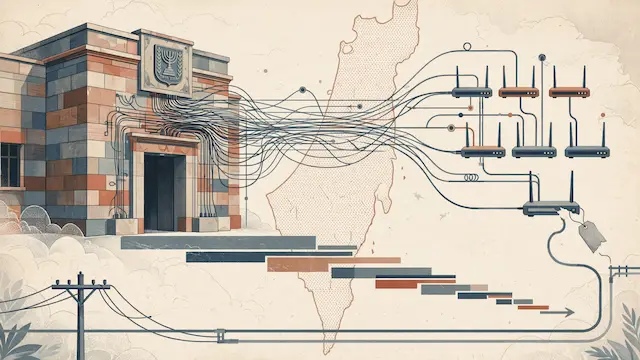
Israel's Ministry of Communications has formally requested data from internet service providers (ISPs) concerning their tariffs, customer acquisition and loss rates, and other key metrics. This initiative marks the initial phase of a planned reform for the fixed-line internet market, aiming to reduce subscription costs and streamline the process of switching providers, similar to reforms implemented in the mobile sector.
The ministry is particularly interested in identifying "sleeping clients" who may be overpaying for services and have not changed providers for extended periods. Current pricing examples show a 2.5 Gbps Bezeq internet subscription with a router costing 139 shekels per month, while some customers on older copper infrastructure pay as much as 180 shekels. The ministry estimates that post-reform, prices could fall to 80 shekels or less.
Analysis of customer complaints reveals significant hurdles in switching providers, including lost workdays due to technician wait times, costs associated with equipment returns, and the risk of double payments during the transition. The proposed reform includes eliminating monthly router rental fees (around 20 shekels) by having consumers purchase a single, universally compatible router. The ministry plans to establish a unified standard for private equipment connection, enabling remote activation and self-service setup without technician intervention.
Furthermore, the reform will mirror mobile number portability by requiring customers to engage only with their new provider for the entire switching process. The new provider will manage the disconnection from the old service to prevent duplicate billing. The responsibility for equipment return will shift to the departing ISP, with consumers only potentially incurring depreciation charges. The ministry is also exploring the creation of a technological clearinghouse to coordinate ISP operations.
The same event, reported separately by each outlet. Open a few to compare what different newsrooms emphasize — and what they leave out.
Centre 1Other 1
