
Record Voter Turnout in Israeli Elections, Extension Request Denied
Translated & summarized from Behadrei Haredim by baba
Israeli elections saw record voter turnout, with 74.3% casting ballots by 8:00 PM, surpassing previous records. The Central Elections Committee denied a request to extend voting hours despite long queues. Prime Minister Netanyahu urged the Haredi public to vote, warning of persecution. Concerns linger for parties near the electoral threshold, and final results may be delayed by the counting of special ballots.
The story in 6 lines · by baba
- Record 74.3% voter turnout recorded by 8 PM in Israeli elections, highest since 1988.
- Central Elections Committee denied requests to extend polling hours despite high turnout.
- Prime Minister Netanyahu urged Haredi voters to go to polls, warning of persecution.
- High turnout increases vote count needed to pass the 3.25% electoral threshold.
- Counting of special ballots, including soldiers' votes, may extend results until week's end.
- Severe weather in southern Israel disrupted voting for some residents.
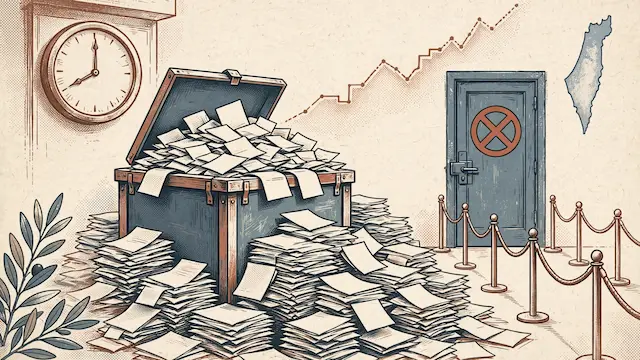
With less than an hour remaining until polling stations closed for the 26th Knesset elections, voter turnout reached a record high. By 8:00 PM, 74.3% of eligible voters, totaling 5,449,277 citizens, had cast their ballots, marking the highest turnout for that hour since 1988. This figure surpasses the 66% recorded at the same hour in the previous elections in November 2022 and has already exceeded the final turnout of 70.63% from those elections.
Despite the significant increase, the pace of voting slowed slightly in the final two hours. The high turnout led to a dispute over the closing time. The Likud party, joined by Shas and Otzma Yehudit, requested an extension beyond 10:00 PM from the Central Elections Committee Chairman, Judge Noam Solberg, citing long queues. However, Yisrael Beiteinu, led by Gadi Eisenkot, opposed the extension. The committee ultimately rejected the request, stating that the high participation did not justify a blanket extension, though it clarified that anyone in line before the official closing time would be allowed to vote.
An exception was made in Hebron, where voting was extended until 10:00 PM due to a power outage. Meanwhile, Haredi parties intensified efforts to mobilize voters, with activists from Shas and Yahadut HaTorah issuing urgent calls, including "Gevald" (a cry of alarm) and shofar blasts, to encourage participation amid concerns of voter apathy.
Prime Minister Benjamin Netanyahu appealed to the Haredi public via 'Bخدrei Haredim', urging them to vote and warning of severe repercussions for the Haredi community and yeshivas if a government were formed with the support of Ra'am. He described the potential scenario as "unprecedented persecution of Haredim."
Concerns remain for parties hovering around the 3.25% electoral threshold, as the high turnout increases the number of votes needed to pass. Pollster Shlomo Filber suggested the possibility of surprises in the results, where even a seemingly safe party could fail to enter the Knesset.
The Central Elections Committee also issued new guidelines regarding ballot validity, instructing polling station committees not to automatically disqualify votes with minor flaws like small holes or smudges, as long as the voter's intent is clear. However, ballots with marks that could identify the voter will be examined individually. This directive followed complaints about missing, obscured, or damaged ballots.
An unusual incident was reported in Bat Yam, where Deputy Mayor Katy Fiasetzki and Democratic party activists claimed to have been attacked during election activities. A complaint has been filed with the police.
In the south, severe weather and flooding caused disruptions, blocking roads like Route 90 and preventing some residents in the Arava region from reaching their homes and potentially their polling stations. Residents of Neot HaKikar requested accommodations due to these delays.
Most polling stations were scheduled to close at 10:00 PM, with initial TV exit polls expected shortly after. The vote count will commence, with results gradually flowing to the Central Elections Committee throughout the night. The final picture may change as hundreds of thousands of double envelopes, including votes from soldiers and those who voted outside their usual precincts, are counted, a process that could extend until the end of the week.
Mentioned



