
Southern Israel Roads Closed Due to Flooding, Eilat Cut Off
Translated & summarized from Mignews by baba
Police in Southern Israel have closed multiple major roads, including all routes to and from Eilat, due to severe flooding. The closures affect highways like Route 90, 25, 40, 13, and 12. The only exception allows travel to Ramon Airport, with authorities advising against using closed roads and promising further updates.
The story in 5 lines · by baba
- All roads to and from Eilat are closed due to severe weather and flooding.
- Police have updated lists of closed roads in Southern Israel, including Routes 90, 25, 40, 13, and 12.
- Travel to Ramon Airport remains the only permitted exception for vehicles entering or leaving Eilat.
- Authorities are prioritizing public safety and urging drivers to avoid closed routes.
- Further updates on the road situation will be provided as conditions change.
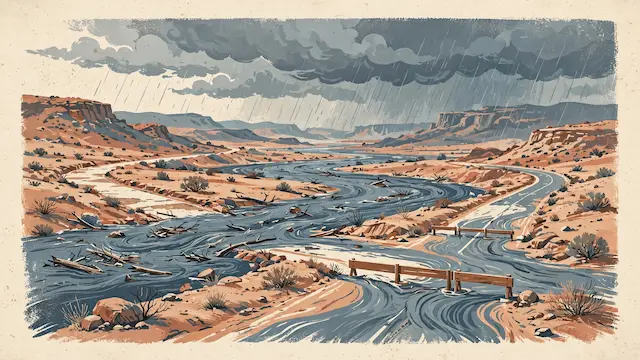
Police in Israel's Southern District, along with the National Road Police and MAGAV, are working to manage traffic disruptions caused by severe weather conditions. The primary focus is on ensuring public safety and preventing any threats to life. The police press service announced an updated list of road closures.
Route 90 is completely blocked from the Zohar junction through the Arava junction to Eilat. Route 25 is closed between the Tzafit and Oron junctions. Route 40 is restricted from Mitzpe Ramon to the Ketura junction, Route 13 from Menuha to the Tzihor junction, and Route 12 from Eilat to the Neot Smadar junction.
These closures mean all roads leading to and from Eilat are impassable, with the sole exception for those traveling to Ramon Airport. Police are urging drivers to avoid closed routes and will provide further updates on the road situation as it develops.
Mentioned
The same event, reported separately by each outlet. Open a few to compare what different newsrooms emphasize — and what they leave out.
Centre 1Right 1Haredi 1Other 1



Not the same event — other stories that share this one’s people, places, or theme: background, reactions, and follow-ups.


