
Record Turnout Marks Israeli Election Day Amid Voter Indecision
Translated & summarized from Maariv by baba
Israel experienced record voter turnout on Election Day 2026, with long lines at polling stations nationwide. While Netanyahu's supporters were reportedly decided, many voters deliberated between Naftali Bennett and Gadi Eisenkot until the last minute. The high turnout, with 44.9% voting by 2 PM, was the highest in decades for that hour. Voters described a sense of urgency and a feeling of fighting for their country.
The story in 6 lines · by baba
- Record voter turnout marked Israel's 2026 Election Day with long queues at polling stations.
- Voters supporting Benjamin Netanyahu appeared decided, while others debated between Naftali Bennett and Gadi Eisenkot.
- By 2 PM, 44.9% of eligible voters had cast ballots, the highest rate for that hour in decades.
- Some voters split their ballots within families, choosing different candidates from the same bloc.
- Voters described a sense of urgency and a feeling of fighting for their country.
- The election day saw unusual congestion and waits exceeding an hour for some voters.
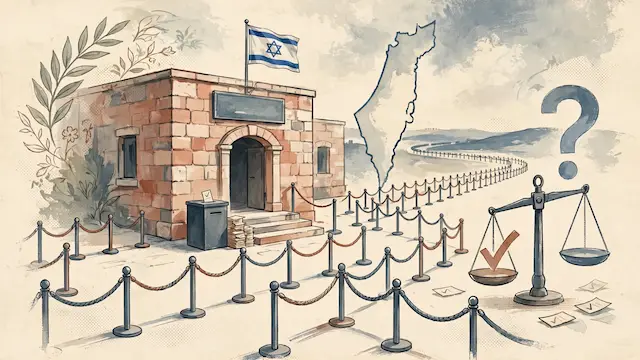
Election Day 2026 saw exceptionally high voter turnout across Israel, with long queues and unusual congestion reported at polling stations nationwide. Some voters faced waits exceeding an hour. While supporters of Benjamin Netanyahu appeared resolute in their choice, many other voters were reportedly undecided between Naftali Bennett and Gadi Eisenkot until the last moment.
By 2 PM, 44.9% of eligible voters had cast their ballots, marking the highest turnout rate for that hour in decades, according to the Central Elections Committee. Reports from the ground described a lively atmosphere with continuous streams of voters arriving at polling stations. Election workers in Petah Tikva noted a constant flow of people since the polls opened at 7 AM, with no minute-long breaks in voting.
In Yavne, one voter reported a 20-minute wait, an unusual experience for her. In Kfar Saba, a voter described waiting over an hour around 10 AM, prompting her to leave and return later. In Rishon LeZion, voters spoke of last-minute decisions, splitting family votes between parties, and a shared sentiment that these elections felt different.
Among voters leaning towards the "change bloc," a notable trend was the decision to split votes within families. Some couples decided to vote for Bennett, citing his perceived sanity and rising poll numbers, while others chose him for his charisma and political experience. Their spouses, however, opted for Eisenkot, preferring to support the leader of the bloc. These decisions were often framed as part of a broader political calculation to influence the bloc's composition and the chances of ousting the current government.
Conversely, some voters expressed unwavering support for Netanyahu, stating "We are always on the right side. It's either right or Palestine, so people must go vote. We understand we are fighting for our home." The high turnout and the palpable sense of urgency were widely commented on, with voters describing the atmosphere as a fight for their country, a stark contrast to previous, more dormant election days.
The day was characterized by high engagement and a sense of importance among voters, alongside the difficulty in choosing between candidates within the same bloc. For couples and families, the choice often divided between Netanyahu's supporters and those seeking change, with a particular split within the change bloc between Bennett and Eisenkot. Some voters admitted their indecision persisted until the morning, while others made their final choice just moments before casting their ballot.
Mentioned
The same event, reported separately by each outlet. Open a few to compare what different newsrooms emphasize — and what they leave out.
Centre 3Right 1Haredi 2Other 4









Not the same event — other stories that share this one’s people, places, or theme: background, reactions, and follow-ups.


