
Israelis Spend Less on Election Day Compared to 2022
Translated & summarized from i24NEWS by baba
Israelis spent an average of 202 shekels per credit card on election day, a 15% decrease from the 2022 elections, according to MAX data. Food and beverages were the top spending category. Meanwhile, fintech company Hyp reported a 13% rise in overall transactions compared to the previous week, with fashion and restaurants showing significant increases, though food delivery saw a sharp decline.
The story in 6 lines · by baba
- Israeli credit card spending on election day fell 15% compared to 2022.
- Food and beverages accounted for 59% of election day spending.
- Online purchases were higher on average than in-store transactions.
- Galilee and Valleys residents spent the most per card.
- Fashion transactions increased by 198% on election day.
- Food delivery transactions decreased by 78% on election day.
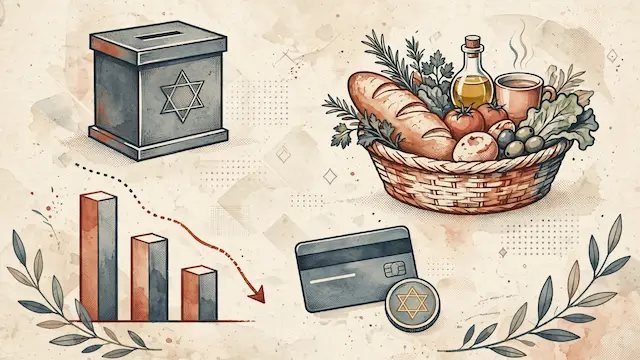
Israelis spent less on average per credit card on election day for the 26th Knesset compared to the previous election in 2022, according to data from MAX. As of 10 AM on Tuesday, the average expenditure per card was 202 shekels, a decrease of approximately 15% from the 2022 election day. Food and beverages accounted for the largest portion of spending at about 59%, followed by leisure and entertainment at 16%, and clothing and footwear at 10%. Physical purchases represented 47% of transactions with an average of 147 shekels, while online purchases made up 53% with a higher average of 263 shekels. Residents of the Galilee and Valleys region led in average spending per card at 208 shekels, followed by the Sharon and Southern Shephelah at 207 shekels, and Gush Dan and Tel Aviv at 202 shekels.
In contrast, fintech company Hyp reported a 13% increase in the number of transactions by 10 AM compared to the same day the previous week. The fashion sector saw the most significant rise, with a 198% increase in transactions and an average transaction amount up by 17% to 326.64 shekels. Restaurants also experienced a 10% rise in transactions, with the average amount increasing by 50% to 75 shekels. However, food delivery services saw a sharp 78% decrease in transactions.




