Jordan Strikes Syria in Retaliation for Church Attack, Civilian Casualties Reported
Translated & summarized from Ynet by baba
Jordan launched airstrikes in Syria targeting terrorist groups linked to a deadly church attack in Jordan that killed nine people. The Jordanian army claimed coordination with Syria, but Damascus denied this, reporting civilian casualties from the strikes. Jordanian forces had previously captured three suspects in the church attack, which occurred in the village of Hamoud. The strikes highlight differing views between Jordan and Israel on Syria's future stability.
The story in 5 lines · by baba
- Jordan conducted airstrikes in Syria in retaliation for a deadly church attack that killed nine people.
- Syria denied coordinating with Jordan on the strikes and reported civilian casualties, including children.
- Jordanian forces captured three suspects allegedly linked to the church attack.
- The strikes underscore differing Jordanian and Israeli perspectives on Syria's future stability.
- The church attack occurred in the Jordanian village of Hamoud during a funeral.
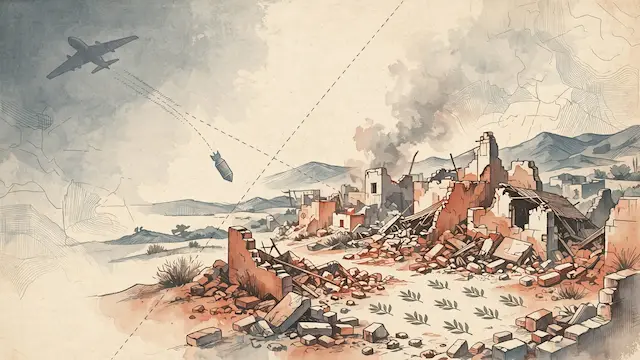
Jordan announced on Monday that it had conducted airstrikes on terrorist hideouts in Syria, targeting groups linked to the militants responsible for a deadly attack on a church in Jordan over the weekend. The Jordanian army stated that the strikes, part of an operation dubbed "Jordanian Deterrence - Hamoud," destroyed several terrorist positions in southeastern Syria, killing and wounding numerous militants and their vehicles. The operation was named after the Jordanian village of Hamoud where the church attack occurred.
However, the Syrian government disputed Jordan's claim of coordination, stating that the strikes were not pre-arranged with Damascus. Syria reported that the Jordanian attacks resulted in civilian casualties, including women, children, and an elderly man, and launched an investigation into the incident. Syrian authorities indicated that communication channels were open with Jordan to discuss the situation and stressed the importance of joint coordination to preserve Syrian sovereignty.
The Jordanian church attack, which took place during a funeral in the village of Hamoud, resulted in the deaths of nine people and left at least 34 injured. Jordanian security forces apprehended three suspects in connection with the attack after a manhunt, with the suspects reportedly injured during a shootout in a deserted house. The suspects were identified as Al-Za'a Zidan Muhammad, Mishal Zidan Muhammad, and Ahmed Sami Hussein.
King Abdullah of Jordan had ordered a strong response to the church attack, emphasizing zero tolerance for terrorists and those who promote divisive ideologies. The Jordanian Interior Minister stated that all involved in the attack would be held accountable, asserting that Jordan emerged stronger from the incident. The Director of General Security stated that the captured terrorists acted alone and did not represent the views of the local population or Jordanian society.
This is not the first time Jordan has conducted strikes in Syria, typically targeting drug smuggling networks along the border. The current offensive occurs amidst criticism from King Abdullah regarding what he describes as Israel's aggressive actions in the region, including Israeli strikes in Syria. Analysts suggest that Jordan's primary goal in southern Syria is stability, supporting decisive action against extremist groups while opposing measures that could weaken the Syrian state or its territorial integrity, highlighting a growing divergence between Jordan and Israel on the future of Syria.
Mentioned
The same event, reported separately by each outlet. Open a few to compare what different newsrooms emphasize — and what they leave out.
Centre 2Other 2



Not the same event — other stories that share this one’s people, places, or theme: background, reactions, and follow-ups.