
Foreign Actors Seek to Deepen Israeli Societal Divisions Ahead of Elections
Translated & summarized from Davar by baba
A new report by INSS and FakeReporter reveals that foreign actors, including Iran, are using social media to deepen societal divisions in Israel ahead of elections. While election systems are digitally protected, these groups aim to erode public trust by exploiting existing rifts. Key tactics include coordinated inauthentic behavior and the spread of disinformation, even using deepfakes of victims. Despite high-level protection of voting systems, concerns remain about social media platform preparedness and the potential for election day manipulation.
The story in 6 lines · by baba
- Foreign actors including Iran are using social media to deepen Israeli societal divisions ahead of elections.
- The primary goal of foreign influence operations is to erode public trust in state institutions and the election process.
- Tactics include coordinated inauthentic behavior, fake accounts, and the exploitation of national trauma through deepfakes.
- While election systems are highly protected, concerns persist about social media platform preparedness and regulatory gaps.
- Citizens are urged to critically examine information and verify sources to combat disinformation campaigns.
- Potential election day threats include the spread of false rumors about polling stations and vote tabulation.
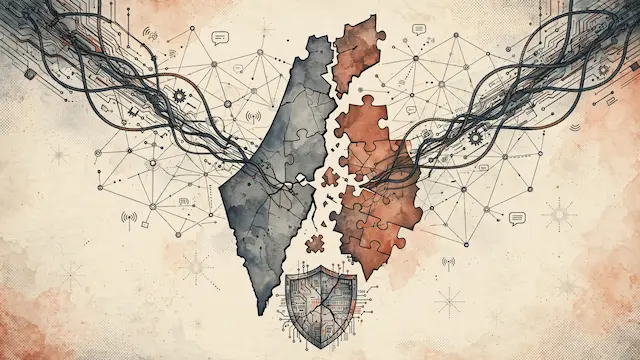
Foreign entities, including Iran, a pro-Palestinian network called "ISNAD," and Russian-linked actors, are actively attempting to influence Israeli society and undermine public trust in the electoral process through social media, according to a report by the Institute for National Security Studies (INSS) and FakeReporter. While Israel's election systems are highly protected against digital threats, these external actors aim to exploit existing societal divisions, particularly those related to the October 7th attacks, the conscription of ultra-Orthodox men, and religion-state relations, to foster suspicion and despair among citizens. The primary goal appears to be eroding faith in state institutions and the election process itself, rather than directly altering election outcomes.
The report, based on data from mid-October and compiled with contributions from cybersecurity firms Alethea, Golden Owl, and ClearSky, identifies "Coordinated Inauthentic Behavior" (CIB) as a key tactic. This involves coordinated efforts by fake or impersonating accounts to spread messages, creating a false impression of genuine public opinion. Iran, for instance, views deepening Israeli societal rifts as a strategic objective, independent of specific election candidates. The ISNAD network, linked to the Muslim Brotherhood and operating from Turkey, aims for long-term societal erosion, while the Russian-attributed "Doppelgänger" operation focuses on undermining Israel's relations with the United States.
Researchers highlighted specific instances, such as the removal of a large Iranian-linked X account, "Miriam Kozak," which had amassed 20,000 followers and millions of views by spreading inflammatory messages and fake news. Another example involved a deepfake video of a Hamas hostage, Shiri Bibas, purportedly announcing she would not vote for the Likud party, demonstrating the exploitation of national trauma for political purposes. FakeReporter CEO Nir Rosen noted that these actors often spread contradictory messages to different segments of the population, exacerbating animosity and making dialogue between opposing groups difficult.
While the Central Elections Committee, in coordination with security agencies, maintains a high level of protection for the voting systems, a report by the State Comptroller and the INSS study pointed to a lack of a national coordinating body and regulatory gaps concerning social media platforms. The Israel Internet Association's VP of Community and Society, Idan Ring, expressed concern over insufficient preparedness by platforms like X and Telegram, and a lack of clear legislation dictating their responsibilities. The report also warns of potential manipulation on election day itself, with the spread of false rumors about polling stations, fraud, or delayed results, and anticipates claims of a "stolen election" post-vote.
Citizens are urged to critically examine information, verify sources, and avoid sharing content that evokes strong emotions without verification. The Israel Internet Association and FakeReporter offer resources to help the public identify and report disinformation. The Central Elections Committee is operating a dedicated situation room and enhancing public outreach, but acknowledges the impossibility of completely sanitizing the online space. The speed of detection and response remains a critical challenge, with varying levels of cooperation from social media companies.
Mentioned




