
Train Service Halted Between Ashdod and Ashkelon Due to Nearby Fire
Translated & summarized from 0404 by baba
Israel Railways suspended train services between Ashdod and Ashkelon due to a fire near the tracks in the Nitzanim area. The Western Negev line is now split, running north to Ashdod and south to Netivot, with the section between Ashdod and Netivot closed indefinitely. Passengers are urged to seek updated travel information.
The story in 5 lines · by baba
- Train services between Ashdod and Ashkelon were temporarily halted due to a fire near the tracks.
- The Western Negev line is operating on a split schedule, north to Ashdod and south to Netivot.
- The section between Ashdod and Netivot is closed to trains until further notice.
- Disruptions and delays are affecting train traffic in the affected region.
- Israel Railways will provide further updates on the service status.
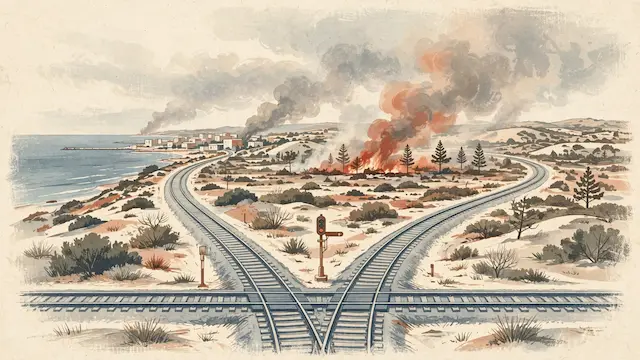
Israel Railways announced a temporary halt to train traffic between the Ashdod and Ashkelon stations on Tuesday, following a fire that broke out near the railway tracks in the Nitzanim area. The disruption has led to changes and delays in train services throughout the region.
As a result, the Western Negev line, which connects Herzliya and Be'er Sheva, is currently operating on a split schedule. Trains are running from the north to Ashdod station and from the south to Netivot station. Israel Railways clarified that the section between Ashdod and Netivot is closed to trains until further notice, and additional updates will be provided.
The company stated that the closure is necessary for safety reasons and to allow emergency services to operate unimpeded. Passengers are advised to check the Israel Railways website or app for the latest information regarding train schedules and alternative routes.
The same event, reported separately by each outlet. Open a few to compare what different newsrooms emphasize — and what they leave out.
Centre 2Right 1



Not the same event — other stories that share this one’s people, places, or theme: background, reactions, and follow-ups.