
Netanyahu Accused of Using Fear as Election Tactic
Translated & summarized from Cursorinfo by baba
Strategic advisor Moshe Klugaft claims Prime Minister Benjamin Netanyahu is using fear of external threats as an election tactic, citing campaign ads and speeches. Klugaft also criticized Likud's campaign materials and discussed voter behavior within the opposition bloc. He noted that while Netanyahu focuses on future dangers, the opposition addresses past events. The advisor believes Netanyahu's strategy exploits fear of the unknown and potential election consequences.
The story in 6 lines · by baba
- Strategic advisor Moshe Klugaft accuses PM Netanyahu of using fear of external threats in election campaigning.
- Klugaft cited campaign ads showing a nuclear blast and speeches about Israel's destruction as examples.
- The advisor criticized Likud's campaign materials, including one featuring opposition figures.
- Klugaft contrasted Netanyahu's focus on future threats with the opposition's focus on past events.
- He suggested voters may favor larger parties, fearing smaller ones might not pass the electoral threshold.
- Klugaft noted Naftali Bennett's rising popularity within the opposition bloc.
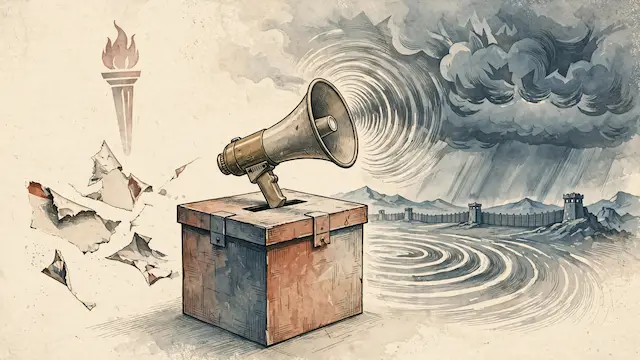
Strategic advisor Moshe Klugaft alleges that Israeli Prime Minister Benjamin Netanyahu is employing fear of external threats and potential future conflicts as a tool in his election campaign. Klugaft, who previously advised Netanyahu and Naftali Bennett, stated in an interview with 103FM that Netanyahu is focusing on external dangers to influence Israeli voters.
Klugaft cited examples such as campaign advertisements depicting a nuclear explosion over Tel Aviv and Netanyahu's speech at a "Patriots" event discussing the threat of Israel's destruction. He also noted Netanyahu's use of unrest in Europe to highlight potential dangers. The advisor believes this strategy preys on fear of the unknown and the consequences of the election outcome.
The advisor also commented on campaign materials from the Likud party, which included figures like Gadi Eisenkot and Ahmed Tibi. He mentioned a flyer in Arabic discussing minority governments, which the Central Elections Committee reportedly ordered removed, though Klugaft expressed doubt about its complete removal.
Recalling the 2015 election, Klugaft asserted that Netanyahu understands how to effectively use fear. He contrasted Netanyahu's focus on future threats with the opposition's emphasis on past events, noting that Netanyahu aims to shift voter attention to potential future dangers, including the possibility of Israel's destruction if the political situation changes.
Klugaft also discussed the opposition bloc, suggesting that voters might favor larger parties due to concerns that smaller parties may not pass the electoral threshold. He mentioned a recent study indicating the effectiveness of this tactic. He criticized Eisenkot's claims about changing the Knesset speaker and forming a government, stating they are not factual, though some voters believe them. Klugaft observed Bennett's rising popularity and suggested that while both Eisenkot and Bennett might succeed, their success could negatively impact other opposition parties, potentially altering the overall balance of power.
Mentioned




