
First Families Settle New Shalem Community in Samaria
Translated & summarized from Hamal by baba
The new settlement of Shalem in northern Samaria has officially been established with the arrival of its first resident families. This development is part of a larger plan to create 19 new communities in the region, following a government decision and in partnership with settlement organizations. The settlement is strategically located and is believed to be situated near the ancient biblical city of Shalem. Officials and new residents expressed excitement and hope for the settlement's future growth and connection to Jewish heritage.
The story in 6 lines · by baba
- The new settlement of Shalem in northern Samaria has officially been established with the arrival of its first families.
- This is part of a plan to establish 19 new communities in northern Samaria, supported by government ministers.
- The settlement is strategically located and believed to be near the ancient biblical city of Shalem.
- The establishment follows the 2005 disengagement, with four previously evacuated communities also being renewed.
- Yossi Dagan, Head of the Samaria Regional Council, welcomed the families and emphasized returning to the area.
- New residents expressed excitement about settling in Shalem and connecting with the region's heritage.
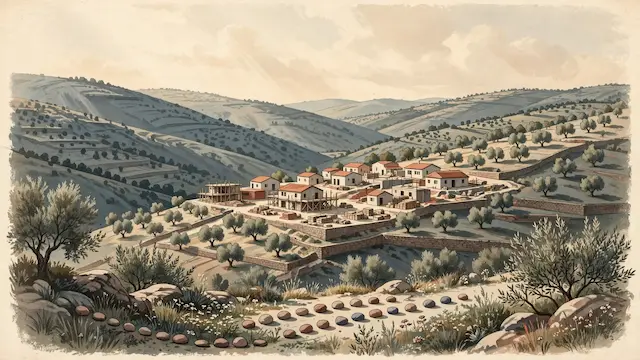
A historic milestone was reached in the northern Samaria region as the new settlement of Shalem officially began its establishment with the arrival of the first families to permanent residences. Trucks carrying equipment have arrived, and the founding families are moving into prefabricated structures. The settlement's establishment precedes an official inauguration ceremony scheduled for later today, which will be attended by ministers, Knesset members, public figures, the head of the Samaria Regional Council Yossi Dagan, and senior members of the Amanah movement.
The initiative follows a government decision made approximately a year ago, spearheaded by Ministers Israel Katz and Bezalel Smotrich. This move is part of the broader "Connection Plan" led by the Samaria Regional Council in partnership with the Amanah movement and the Settlement Division. The plan aims to establish 19 new communities in northern Samaria, aligning with the Samaria Regional Council's strategic "One Million in Samaria" program.
Shalem is strategically located in northern Samaria, intended to strengthen the Israeli presence in the area. Its location is believed to correspond with the ancient biblical city of Shalem, mentioned in the Book of Genesis in relation to Jacob's journey. Head of the Samaria Regional Council Yossi Dagan expressed his excitement upon welcoming the first families, stating, "21 years ago they destroyed and expelled us from Homesh, Sa-Nur, Ganim, and Kadim. 21 years later, we have returned." He added, "As part of the Connection Plan, we are building 19 new settlements in northern and central Samaria. We are here on behalf of all the people of Israel, for past and future generations. We are privileged to be the pioneers. You are the first, and thousands will follow."
Achinom Mizrahi, a resident of the new settlement, shared her enthusiasm: "We are here in Shalem. We are very excited and very happy, and God willing, we will grow into a large settlement. Come visit, come hike, there is much to see here, incredible landscapes, heritage, the heritage of our fathers. We are waiting for you." Another resident, Ofir Chazi, remarked, "We are here in the settlement of Shalem, named after our forefather Jacob, who arrived in the Land of Israel and came to Shalem, the city of Shechem." He noted the proximity to Mount Gerizim and Mount Ebal, expressing hope for the settlement's prosperity.
Shalem is the ninth settlement established following the disengagement, preceding Rehava'am, Ebal, Emek Dotan, Noa, and the four resettled communities of Homesh, Sa-Nur, Ganim, and Kadim. The article also mentions the renewal of four communities evacuated during the 2005 disengagement: Homesh, Sa-Nur, Ganim, and Kadim.
Mentioned
The same event, reported separately by each outlet. Open a few to compare what different newsrooms emphasize — and what they leave out.
Centre 1Right 4




Not the same event — other stories that share this one’s people, places, or theme: background, reactions, and follow-ups.