
Religious Zionist Movement Faces Election Test of Unity and Responsibility
Translated & summarized from Arutz Sheva by baba
The Religious Zionist movement faces an election challenge, urged to unite and prevent the "change bloc" from winning, as adversaries reportedly favor its rise. The article calls for strategic voting to avoid wasted votes and ensure a right-wing victory, while also emphasizing post-election unity and respect for Torah scholars.
The story in 5 lines · by baba
- The Religious Zionist movement faces an election test of unity and responsibility.
- Adversaries of Israel reportedly hope for a victory by the "change bloc."
- Voters are urged to prevent the "change bloc" from taking power by avoiding wasted votes.
- The article criticizes the failure of the Religious Zionist public to unite before the elections.
- A call is made for post-election peace and respect within the political camp.
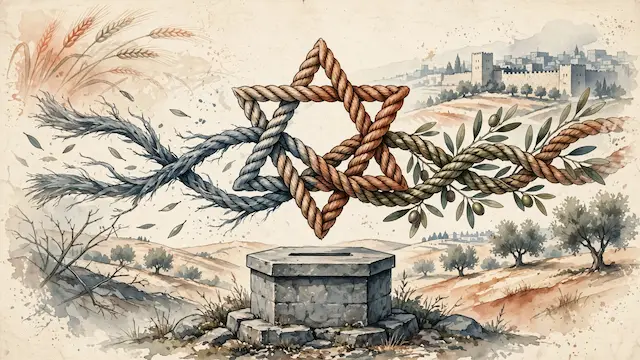
The upcoming election presents a critical test for the Religious Zionist movement, balancing concerns about the "change bloc" potentially gaining power against the risk of losing votes below the electoral threshold. The internal political struggle is accompanied by a call to preserve the honor of Torah scholars and maintain peace within the camp after the election.
The article argues that adversaries of Israel, including the Palestinian Authority, Iran, and the European Union, hope for a victory by the "change bloc" or "peace camp." Iran, for instance, is reportedly using bot networks to amplify left-wing messages. The European Union is accused of funding illegal construction in Area C. The article posits that if these entities favor a particular political outcome, it is likely detrimental to Jewish interests.
It urges voters to prevent the "change bloc" from taking power, emphasizing the need to avoid casting votes for parties unlikely to pass the electoral threshold, such as Noam. The author stresses that this is a matter of "saving a life" and not relying on miracles, advocating for clear communication of these points.
The piece expresses sadness over the Religious Zionist public's failure to unite before the elections, placing responsibility on individuals to be active and influence the outcome to ensure a victory for the right-wing bloc, which it equates with supporting Torah, settlement in Judea and Samaria, and Jewish identity.
Finally, the article calls for speaking truth fearlessly, warning against wasted votes and the rise of the left, while also emphasizing respect for Torah scholars and maintaining peace within the camp and with other political factions after the election. It concludes that voting for parties that will not pass the threshold is a missed opportunity to fulfill the commandment of influencing Israel's future.

