
Ex-Footballer Slams Netanyahu's 'Fearmongering' Nuclear Image
Translated & summarized from Ice by baba
Former footballer Gili Vermouth criticized Prime Minister Benjamin Netanyahu for posting a doctored nuclear mushroom cloud image over Tel Aviv, accusing him of fearmongering. Vermouth stated Netanyahu's message was "choose me or you will all die," and highlighted perceived contradictions in Netanyahu's claims about the Iranian nuclear threat. The incident is part of a larger debate about Netanyahu's use of security threats as a political tool in elections, with critics arguing it blurs the line between genuine warnings and political manipulation.
The story in 5 lines · by baba
- Former footballer Gili Vermouth accused PM Netanyahu of fearmongering with a nuclear image.
- Vermouth stated Netanyahu's message was 'choose me or you will all die'.
- Critics argue Netanyahu uses security threats as a political tool in elections.
- The controversy involves an AI-generated nuclear mushroom cloud image over Tel Aviv.
- Netanyahu's past and present statements on the Iranian threat are under scrutiny.
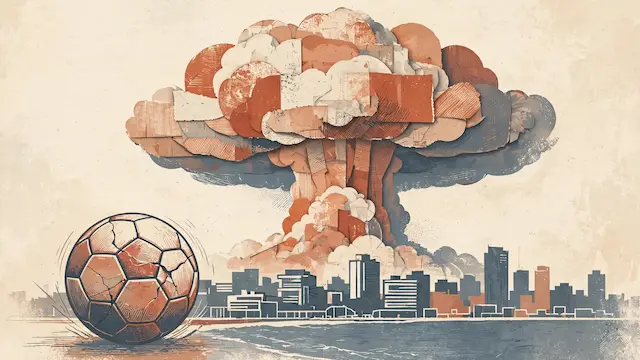
Former Israeli footballer Gili Vermouth has sharply criticized Prime Minister Benjamin Netanyahu over a doctored image depicting a nuclear mushroom cloud over Tel Aviv, posted on social media. Vermouth accused Netanyahu of attempting to frighten the public into believing only he can protect Israel, stating, "In short, choose me or you will all die." He further lambasted the Prime Minister regarding the Iranian threat, pointing to a perceived contradiction between Netanyahu's past claims of having neutralized the threat and his current warnings of annihilation.
Vermouth's remarks join a broader wave of criticism against the use of extreme scenarios and security messaging in political campaigns. Netanyahu has a history of highlighting regional threats, particularly Iran's nuclear program, as issues requiring experienced leadership. Supporters view this as a necessary emphasis on dangers facing Israel, while critics argue it's a political tool to bolster his standing and garner support, a tactic sometimes called a "Gevald campaign" in election cycles.
This approach frames elections not just as choices between parties or policies, but as decisions critical to the nation's future and security, suggesting that any alternative to Netanyahu could lead to dire consequences. While this can create urgency among supporters and boost voter turnout, critics contend that warnings of destruction blur the line between legitimate security alerts and political fearmongering.
The controversy intensified with the AI-generated nuclear image and Netanyahu's discussion of potential economic blockades and sanctions. Critics highlight the apparent contradiction between claims of significant security achievements, like permanently removing the Iranian threat, and dire warnings of existential danger if he is not elected. This discrepancy, they argue, raises questions about the true purpose of these messages and the use of security threats for political gain.
Vermouth's reaction exemplifies how the debate over the nuclear image extends beyond security concerns to encompass Netanyahu's political tactics. While the Prime Minister presents these threats as part of Israel's security reality, opponents argue that portraying them in doomsday scenarios can incite panic and undermine public confidence. The mushroom cloud image thus became a focal point for a wider debate: is it a depiction of a real threat, or the exploitation of disaster fears to influence voters?
The same event, reported separately by each outlet. Open a few to compare what different newsrooms emphasize — and what they leave out.
Left 1Centre 4Right 4Haredi 1Arab 2Other 3
















Not the same event — other stories that share this one’s people, places, or theme: background, reactions, and follow-ups.
