
Israel Sees Influx of Travelers Ahead of Elections
Translated & summarized from Calcalist by baba
Around 65,000 Israelis living abroad are expected to return for the upcoming Knesset elections, leading to a significant increase in incoming air travel. Passenger numbers show a notable gap between arrivals and departures in the days leading up to and including election day. This influx is seen by some as a strong commitment to democratic participation, though the exact number of voters is unconfirmed.
The story in 5 lines · by baba
- 65,000 Israelis living abroad are expected to return for the upcoming Knesset elections.
- Incoming air travel to Israel is projected to significantly exceed departing travel before elections.
- Flight occupancy data shows substantially more passengers arriving than departing on several routes.
- Israir CEO Uri Sircus highlighted the trend as Israelis returning home to vote.
- Domestic tourism patterns in Eilat also show adjustments around election day.
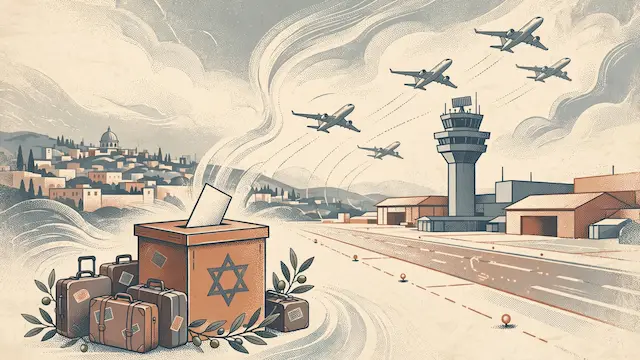
Approximately 65,000 Israelis living abroad are expected to return to Israel for the upcoming Knesset elections, according to an estimate by the Fly&Vote initiative. In the two weeks leading up to the elections on Tuesday, October 27, an estimated 452,000 passengers will arrive in Israel compared to 375,000 departing, a difference of about 77,000 more arrivals. Between October 13 and 26, an average of 32,300 passengers are projected to land in Israel daily, versus 26,800 departing. On election day itself, about 29,000 passengers are expected to arrive.
While the increase in arrivals is moderate compared to last year, it's difficult to determine how many are returning specifically to vote. Flight occupancy highlights the trend: a recent flight from Larnaca arrived with 180 passengers, nearly full, while the return flight had only 32. Similar patterns were observed on flights from Batumi and Berlin, with significantly more arrivals than departures.
These discrepancies may reflect Israelis returning to vote and others postponing overseas travel until after the elections, though this is not definitively proven. Airline officials acknowledge the trend. Uri Sircus, CEO of Israir, noted a clear pattern of more passengers arriving than leaving, attributing it to Israelis returning home to exercise their democratic right to vote, calling it an "inspiring expression of commitment, belonging, and responsibility."
However, without data on travel purpose, the exact portion of this passenger difference attributable to voting is unclear. Out of roughly 7.3 million eligible voters in Israel, about 810,000 reside abroad. Most Israelis abroad cannot vote at Israeli embassies and must return to Israel to cast their ballot, except for specific groups like diplomats.
The travel pattern shift is also visible in domestic tourism, with hotels in Eilat reporting vacation bookings concentrated around the election day, suggesting travelers are planning around their ability to vote in their home districts.
The same event, reported separately by each outlet. Open a few to compare what different newsrooms emphasize — and what they leave out.
Haredi 1Other 2


Not the same event — other stories that share this one’s people, places, or theme: background, reactions, and follow-ups.



