
Tens of Thousands Pray at Rachel's Tomb in Bethlehem
Translated & summarized from Kikar HaShabbat by baba
Hundreds of thousands of Israelis visited Rachel's Tomb in Bethlehem for her Hillula, a tradition spanning millennia. The pilgrimage occurred from Wednesday evening to Friday night, with new regulations requiring a walk to the site. Despite the changes, massive crowds prayed and wept at the tomb, considered a place of salvation.
The story in 5 lines · by baba
- Hundreds of thousands of Israelis visited Rachel's Tomb in Bethlehem for her Hillula.
- The pilgrimage continued a tradition thousands of years old.
- New regulations required attendees to walk the final stretch to the tomb.
- Public transportation was provided from the Teddy parking lot to the complex.
- The site is considered a place of prayer conducive to salvation.
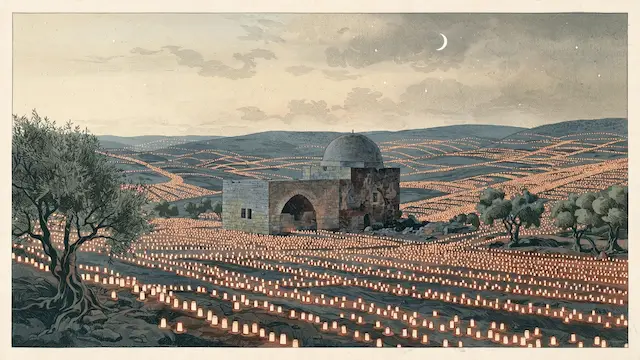
Hundreds of thousands of Israelis visited the tomb of Rachel the Matriarch in Bethlehem to mark her Hillula (commemoration day), continuing a tradition thousands of years old. The pilgrimage began on Wednesday evening, the 11th of Cheshvan, and continued through Friday night. Despite new regulations requiring attendees to disembark from public transport and walk the final stretch to the tomb, the massive crowds proceeded. Organizers prepared a special route for the religious public, described as a "pleasant path," requiring significant resources and effort. The event saw tens of thousands of people praying and weeping at the site, which is considered a place of prayer conducive to salvation during the long exile.
Access to private vehicles was blocked, with public transportation running continuously from the Teddy parking lot directly to the tomb complex. The new directive meant that all public transport passengers were dropped off before the "yellow gate," necessitating the walk to the holy site. The institutions managing Rachel's Tomb undertook a complex operation to facilitate the pilgrimage under these new conditions.
Mentioned
The same event, reported separately by each outlet. Open a few to compare what different newsrooms emphasize — and what they leave out.
Haredi 3


Not the same event — other stories that share this one’s people, places, or theme: background, reactions, and follow-ups.


