
Intelligence Discrepancies Emerge Amidst Political Rhetoric Following Hebron Attack
Translated & summarized from Zman Yisrael by baba
Following a deadly attack in Hebron, Israeli security officials are investigating the perpetrators' motives and affiliations, with no clear intelligence matching the political echelon's rhetoric of imminent war. Senior ministers visited the attack site, making strong statements and engaging in election-related activities. Israel awaits a potential U.S. decision on action, expected after the U.S. midterm elections.
The story in 4 lines · by baba
- Israeli security forces are investigating the Hebron attack, unsure if assailants acted independently or were directed by Hamas.
- Senior Israeli ministers visited the Hebron attack site, making political statements and engaging in election-related activities.
- Current Israeli intelligence does not indicate unusual activity in Iran, Lebanon, or Gaza requiring preemptive action.
- Israel's decision on potential strikes appears dependent on a U.S. green light, anticipated after U.S. midterm elections.
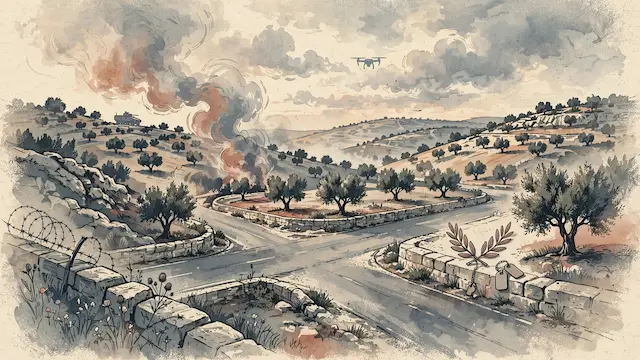
Following a serious attack in Hebron last Friday, significant questions remain unanswered regarding the perpetrators' motives and affiliations. Security officials are uncertain whether the two assailants acted independently or were directed by Hamas operatives based in Turkey. Despite the gravity of the attack, which resulted in the deaths of two soldiers, senior right-wing government officials, including Prime Minister Benjamin Netanyahu, Defense Minister Israel Katz, National Security Minister Itamar Ben-Gvir, and Finance Minister Bezalel Smotrich, visited Hebron. Minister Smotrich conducted an interview from the scene while wearing a flak jacket, projecting an image of being on the front lines of a war. He also called for Ofer Vinter to withdraw from elections. Ministers Ben-Gvir and Smotrich made statements about dismantling the Palestinian Authority and increasing enforcement and demolishing structures, respectively. Defense Minister Katz proposed a large-scale military operation in the West Bank, modeled after the Jenin refugee camp operation.
Chief of Staff Zamir is maintaining a high state of alert, particularly concerning Iran, while also aiming to prevent politically motivated adventurous actions. Currently, Israeli security assessments do not indicate any unusual activity in Iran, Lebanon, or Gaza that would necessitate preemptive Israeli action. Prime Minister Netanyahu had previously stated that Iran and its proxies intended to disrupt the upcoming elections and were prepared to attack Israel from various fronts to prevent his re-election.
Regarding a recent extensive Israeli flyover of Syria and Iraq, security officials described it as routine maneuvers conducted periodically since April. President Donald Trump about the war ending soon, either through an agreement or other means. There is no concrete information suggesting an imminent escalation in any of the active theaters, contrary to the impression being created by the political echelon. Israel's decision-making on potential strikes appears to be contingent on receiving a green light from the United States, anticipated no earlier than the U.S. midterm elections. At that point, attention will also focus on Lebanon, and possibly the Houthi and Iraqi fronts. Reports from Saudi media suggest Hezbollah has informed Iran's Deputy Foreign Minister Saeed Khatibzadeh that the organization does not intend to join any potential conflict. Nevertheless, Israel is operating under a stringent assumption, maintaining a high alert level across relevant fronts, despite the lack of concrete intelligence indicating an immediate outbreak of hostilities.
Mentioned
The same event, reported separately by each outlet. Open a few to compare what different newsrooms emphasize — and what they leave out.
Centre 3Haredi 1



Not the same event — other stories that share this one’s people, places, or theme: background, reactions, and follow-ups.



