
Netanyahu Meets Police Chief Amid Controversy Over Election Integrity Talks
Translated & summarized from Ynet by baba
Prime Minister Benjamin Netanyahu met with the Inspector General of the Police and the Minister of National Security to discuss election integrity, a move that drew criticism for excluding the opposition and the Elections Committee chairman. While the Attorney General initially opposed the meeting, the Elections Committee chairman allowed discussions on public order but not election integrity. Critics accused Netanyahu of attempting to undermine the elections, while the Prime Minister's office stated the meeting was about security threats. Separately, a petition was filed to ban armed observers at polling stations.
The story in 6 lines · by baba
- Prime Minister Netanyahu met with the Police Chief and National Security Minister regarding election integrity.
- The meeting excluded the opposition leader and the Elections Committee chairman, drawing legal and political criticism.
- The Elections Committee chairman permitted discussions on public order but not election integrity.
- Critics accused Netanyahu of attempting to undermine the elections due to fear of losing.
- The Prime Minister's office stated the meeting addressed security threats to the elections.
- A petition was filed to ban armed observers at polling stations, citing potential voter intimidation.
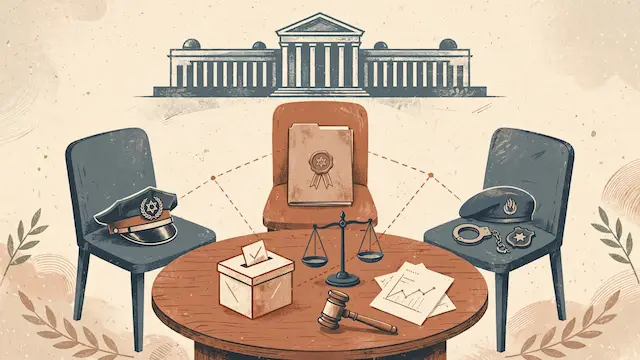
Prime Minister Benjamin Netanyahu met on Sunday with Police Inspector General Dani Levy and National Security Minister Itamar Ben-Gvir for a discussion on "election integrity." Levy assured Netanyahu that the police are prepared to safeguard Israeli democracy and public order, and are also ready for potential terror incidents. The meeting sparked controversy, as opposition leader Yair Lapid and representatives from the Elections Committee were not invited, despite the issue being cross-party. Constitutional law experts suggested the meeting might be illegal, as the responsibility for election integrity lies with the Chairman of the Elections Committee, Judge Noam Sohlberg, not the Prime Minister. Sohlberg ruled that while the Attorney General Gali Baharav-Miara opposed the meeting and Gadi Eisenkot, chairman of the Yisrael Beiteinu party, demanded its cancellation, the discussion could proceed as long as it focused on public order and not election integrity. Ben-Gvir defended the meeting as routine, stating it is the minister's duty to review preparedness and identify gaps. However, Eisenkot strongly criticized Netanyahu, accusing him of attempting to undermine the elections and create a false narrative of compromised integrity due to fear of losing. Eisenkot urged Netanyahu to cease his involvement and that of his associates in the election process. The Likud party stated the meeting was a security discussion concerning threats to the elections, not about their integrity, and invited Sohlberg to send a representative. Netanyahu's attorney, Ilan Bombach, claimed the discussion was prompted by dramatic security warnings of terror threats aimed at disrupting the elections, and that the meeting with Levy was to receive an update on security preparations. Meanwhile, the Joint List and Adalah Center petitioned the High Court of Justice to prohibit armed observers at polling stations, citing concerns that armed presence, particularly in Arab communities, could intimidate voters and lead to violence.
Mentioned
The same event, reported separately by each outlet. Open a few to compare what different newsrooms emphasize — and what they leave out.
Centre 5Right 2Arab 2Other 1









Not the same event — other stories that share this one’s people, places, or theme: background, reactions, and follow-ups.



