
Israel Prepares for Election Day Chaos Amid Security and Disinformation Threats
Translated & summarized from Vesty by baba
Israeli authorities are preparing for various election day disruptions, including terror attacks, public disorder, and widespread disinformation campaigns, with police and the Central Elections Committee conducting extensive drills. Key threats involve security, public order, and election integrity, with a particular focus on digital interference and AI-generated fake content. Thousands of police officers and civilian volunteers are mobilized to monitor polling stations and report violations, though officials acknowledge the difficulty of anticipating all potential problems.
The story in 6 lines · by baba
- Israeli authorities are preparing for election day disruptions including terror, violence, and disinformation.
- Police categorize threats into security, public order, and election integrity issues.
- Disinformation campaigns, including AI-generated content, are a major concern.
- Thousands of police officers and civilian volunteers will monitor over 12,000 polling stations.
- The digital environment is considered the primary source of risks for the upcoming elections.
- Officials acknowledge the challenge of anticipating and responding to all unforeseen events.
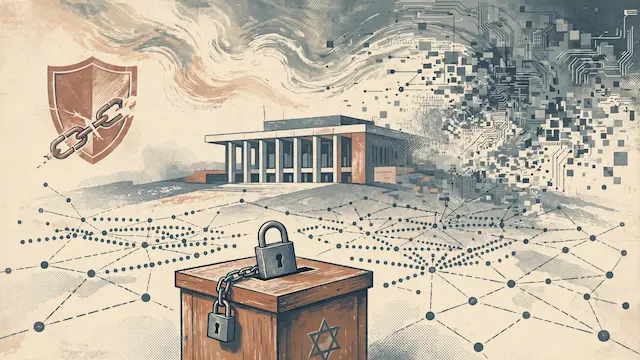
Israeli authorities are bracing for potential disruptions on election day, including terrorist attacks, violence at polling stations, disinformation campaigns, and challenges to the results. For months, police, the Central Elections Committee (CEC), and civil organizations have conducted drills and simulated crisis scenarios, acknowledging the challenge of anticipating every threat. Over 12,000 polling stations are set to open for more than 7.3 million voters following a period of intense political conflict and societal division, raising concerns about potential provocations.
Police have categorized potential threats into three main areas: security risks like terror attacks, public order disturbances such as fights or blocking polling station entrances, and election integrity issues including impersonation, cyberattacks, and the spread of false information, potentially amplified by AI. Simple interference tactics, like falsely announcing polling station relocations or creating artificial queues, are also a concern. Former CEC Chairman Hanan Melzer noted that even lawful actions, like voters deliberately delaying their voting process, could cause significant delays and deter voters.
A significant focus of preparation is the digital sphere, with concerns about a surge in fake messages, false emergency reports, and intimidation tactics. A simulation by the Institute for National Security Studies (INSS) explored various interference methods, from pre-election illegal polls and covert campaigning to AI-generated fake videos and overwhelming emergency services with calls on election day. Post-election risks include attempts to discredit results and incite protests.
Police have been preparing for about a year, mobilizing nearly their entire force, including four reserve Border Police companies, with thousands of officers and volunteers deployed nationwide. Polling stations are assigned risk levels, dictating the police presence. Post-election, police will escort ballot transportation. However, authorities admit some issues, like verifying voter impersonation, may not be immediately resolvable.
An additional layer of oversight comes from a civil election monitoring headquarters, utilizing approximately 15,000 volunteers. These volunteers will observe and report violations via a dedicated operational center and mobile app, aiming to supplement official efforts. The organization emphasizes its role is not to confront authorities but to provide extra control and rapid problem identification.
Experts identify the digital environment as the primary risk, stressing the need for swift removal of illegal content and official refutation of rumors. The CEC has met with major social media platforms to discuss combating fake accounts, bots, foreign interference, and AI manipulation. The National Cyber Directorate and CEC are running "Election Shield" to counter cyberattacks and system breaches. Concerns also remain about party apps used for voter mobilization and the protection of personal data.
Mentioned
The same event, reported separately by each outlet. Open a few to compare what different newsrooms emphasize — and what they leave out.
Other 2

Not the same event — other stories that share this one’s people, places, or theme: background, reactions, and follow-ups.




