
Major Storm Expected to Hit Israel During Election Day
Translated & summarized from Cursorinfo by baba
Israel is facing a severe storm starting Tuesday, October 27, bringing heavy rain, thunderstorms, and a significant risk of flash floods, especially in southern and eastern desert areas. The unstable weather is expected to coincide with election day and continue for several days, potentially impacting travel. While initial temperatures will be warm, they are forecast to drop later in the week.
The story in 5 lines · by baba
- A powerful storm with heavy rain, thunderstorms, and flash flood risks is forecast for Israel starting October 27.
- Southern and eastern desert regions, including the Negev and Arava, face the highest threat of flash floods.
- The storm's onset coincides with Israel's parliamentary election day, potentially affecting voter travel.
- Unusually warm temperatures are expected initially, followed by a gradual decrease towards winter norms.
- Residents are warned to be cautious, especially in desert areas prone to sudden wadi flooding.
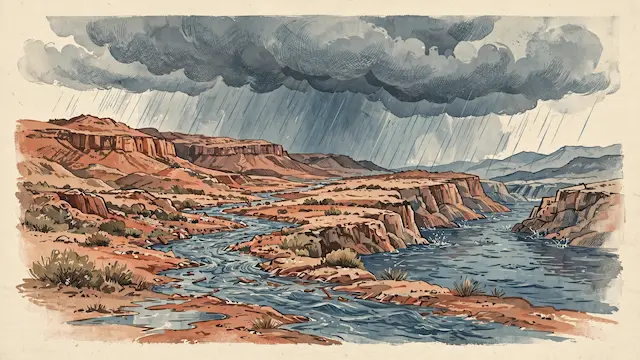
Israel is bracing for a significant deterioration in weather conditions, with a powerful storm forecast to begin on Tuesday, October 27, coinciding with the parliamentary elections. Meteorologists predict heavy rain, thunderstorms, hail, and frequent lightning across the country, with a particular threat of flash floods in southern and eastern regions. The unstable weather is expected to persist for several days, potentially lasting until the end of the following week.
The storm is anticipated to start with unusually warm and humid conditions before transitioning to more winter-like weather with falling temperatures. By Tuesday morning, increased cloudiness is expected, followed by rain in various parts of the country. The southern regions, including the southern Negev, Eilat surroundings, and the Arava, are initially forecast to experience the most severe weather, including thunderstorms and lightning. The primary danger lies in flash floods in desert wadis, which can form rapidly even without direct heavy rain in the immediate vicinity. The area around the Dead Sea also faces an elevated risk of flash floods.
By Tuesday afternoon, the storm's intensity is expected to increase, spreading to other areas with heavy downpours, hail, and lightning. The Judean Desert may also become vulnerable to flash floods. These conditions could complicate travel on election day, especially in areas prone to rapid water accumulation.
Rain is predicted to continue nationwide on Wednesday, October 28, with potential thunderstorms and hail, particularly in the south and east. The risk of flash floods in riverbeds and desert canyons will remain, making excursions in these areas hazardous. On Thursday, October 29, the storm's focus is expected to shift north and central Israel, signaling a move towards more typical winter weather.
Forecasters caution that the weather models are still being updated, and the precise distribution of rainfall and storm intensity may change. Despite the rain and thunderstorms, initial temperatures will be unusually warm for late October, with a gradual decrease expected from Wednesday onwards, potentially falling below the seasonal norm by the end of the week. Residents are strongly advised to exercise caution, especially in desert areas, and to heed weather warnings, particularly avoiding wadis and canyons during periods of heavy rainfall.
The same event, reported separately by each outlet. Open a few to compare what different newsrooms emphasize — and what they leave out.
Centre 1Haredi 1Other 2



Not the same event — other stories that share this one’s people, places, or theme: background, reactions, and follow-ups.




