
Netanyahu Warns of Potential Banking Sanctions, Economic Fallout
Translated & summarized from Panet by baba
Prime Minister Benjamin Netanyahu has warned of potential U.S. banking sanctions and the eventual end of American security aid, urging preparations for an economy operating outside international financial systems. He has requested a plan to address this scenario, potentially involving digital currencies. The remarks have sparked debate about Israel's economic future and its reliance on global markets, especially the high-tech sector, which accounts for a significant portion of its exports.
The story in 6 lines · by baba
- Prime Minister Benjamin Netanyahu warned of potential U.S. banking sanctions against Israel.
- Netanyahu stated that U.S. security aid to Israel is expected to end, calling it a matter of time.
- He has requested a plan to prepare the Israeli economy for operating outside international financial systems.
- Potential sanctions could severely impact Israeli banks, businesses, and exports, particularly the high-tech sector.
- The Bank of Israel has reportedly warned of escalating sanctions from various countries.
- Netanyahu's comments have initiated discussions on Israel's global economic and financial future.
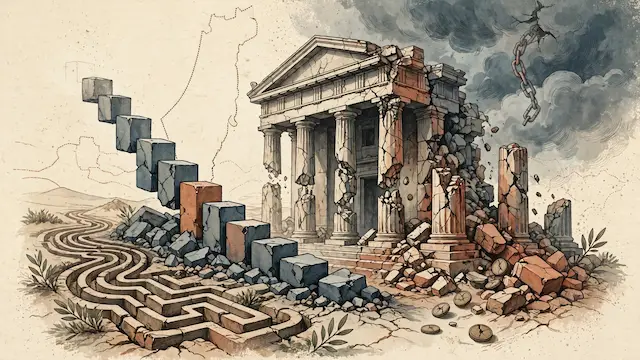
Prime Minister Benjamin Netanyahu has raised concerns about the future of the Israeli economy, suggesting that U.S. security aid to Israel might end and that the country could face banking sanctions. He revealed that he has requested a plan to prepare for an economic scenario operating outside international financial systems, according to a report by Walla!.
In an interview, Netanyahu stated that U.S. security aid to Israel is set to conclude, describing it as "just a matter of time." This comes amid ongoing discussions about the future of American support for Israel and shifting political stances within the United States. The current U.S. security aid agreement is valued at $38 billion and extends until 2028.
Walla!'s economic analysis highlighted that Netanyahu's remarks about potential banking sanctions and the need for Israel to prepare for an economy that can circumvent them were particularly concerning. Such sanctions could significantly impair Israeli banks' ability to engage with international financial institutions, conduct cross-border transactions, secure credit, and process payments.
The report cautioned that widespread sanctions could severely impact Israeli companies, exporters, importers, investors, and business owners, threatening broad sectors of economic activity. It emphasized Israel's heavy reliance on global markets, technology, research, and advanced services, particularly the high-tech sector, a key growth engine. In 2025, high-tech exports of goods and services reached approximately $85 billion, accounting for 58% of Israel's total exports, according to the Israel Innovation Authority.
Netanyahu also discussed the potential use of digital currencies and blockchain technology for alternative financial arrangements, confirming that a plan for this is already being developed. However, the analysis stressed that digital currencies are not a complete substitute for the international banking system, do not provide credit lines or access to global capital markets, and do not exempt transactions from international sanctions.
The report questioned the source of these potential sanctions and whether Israel possesses specific information or warnings, urging clarification on the risks behind the Prime Minister's statements. It also referenced warnings attributed to the Bank of Israel regarding the possibility of escalating sanctions from various countries, distinguishing between preparing for potential economic risks and a scenario of comprehensive banking sanctions. Ultimately, Netanyahu's remarks have initiated a discussion on Israel's future economic and financial relations globally and its preparedness for potential reductions in U.S. support or increased international restrictions, given its dependence on global trade, investment, and financial cooperation.
Mentioned
The same event, reported separately by each outlet. Open a few to compare what different newsrooms emphasize — and what they leave out.
Centre 1Arab 1Other 1


Not the same event — other stories that share this one’s people, places, or theme: background, reactions, and follow-ups.




