
Netanyahu May Use Iran Conflict to Force Unity Government Post-Election
Translated & summarized from Cursorinfo by baba
Israeli Prime Minister Benjamin Netanyahu may initiate military action against Iran after the October 27 elections to pressure rivals like Gadi Eisenkot into a unity government. While a pre-election strike is unlikely, sources suggest Netanyahu could use renewed conflict to force a coalition if the results are inconclusive. US President Donald Trump and Israeli military leadership have expressed reservations about pre-election escalation. Recent polls show a tight race, potentially creating the uncertainty Netanyahu could exploit.
The story in 6 lines · by baba
- Benjamin Netanyahu may use a renewed conflict with Iran to force a unity government after the October 27 Israeli elections.
- US President Donald Trump has opposed an Israeli strike on Iran before the US midterm elections on November 3.
- IDF Chief of Staff Eyal Zamir has warned about the potential impact of an Iran strike on Israel's elections.
- Gadi Eisenkot might face a choice between a minority government or a unity government with Netanyahu if elections are inconclusive.
- Recent polls show a very close race between Netanyahu's Likud and Eisenkot's Yashar parties.
- Netanyahu previously sought to restart military operations against Iran, reportedly to delay the elections.
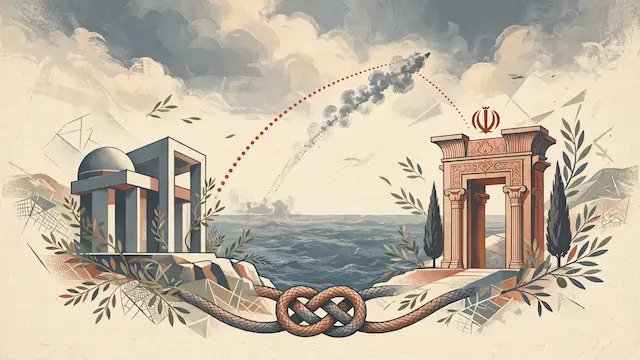
Israeli Prime Minister Benjamin Netanyahu might initiate military action against Iran after the upcoming October 27 elections to pressure political rivals, particularly Gadi Eisenkot, into joining a national unity government. While an immediate strike before the vote is considered unlikely, sources suggest Netanyahu could use renewed conflict as leverage, especially if the election results are inconclusive. This strategy aims to create a wartime scenario, similar to the one that led to Eisenkot joining Netanyahu's government after the October 7 Hamas attack.
Recent attempts by Netanyahu to restart military operations against Iran have reportedly been unsuccessful, with speculation that he sought to delay the elections. However, the possibility of a pre-election strike has not been entirely ruled out. The United States, under President Donald Trump, has expressed opposition to escalating the conflict before the US midterm elections on November 3. US Secretary of Defense Pete Hegseth visited Israel to discuss the Iranian issue with Netanyahu.
Israel's military leadership, including IDF Chief of Staff Lt. Gen. Eyal Zamir, has also voiced concerns. Zamir reportedly warned US counterparts about the potential impact of an attack on Israel's elections, emphasizing the sensitive political timing. This suggests internal opposition within Israel to a pre-election military escalation.
If Eisenkot wins, Netanyahu's options for initiating military action would be limited, especially during the transition period. However, a scenario where Eisenkot gains an advantage but falls short of a clear majority could create an opportunity for Netanyahu. In such a situation, Eisenkot might consider forming a minority government or a unity government with Netanyahu, potentially involving a rotation of the prime ministership. Netanyahu could exploit the ensuing uncertainty by reigniting the Iran conflict to push for a broad unity government.
Recent polls indicate a close race between Netanyahu's Likud party and Eisenkot's Yashar party. One Maariv poll predicts Likud receiving 19 seats and Yashar 21, while a Channel 12 poll suggests Likud getting 19 seats and Yashar 23. This close contest underscores the potential for a post-election political deadlock that Netanyahu might seek to leverage.
Mentioned



