
Netanyahu's Shift: From Global Integration to Sanctions Circumvention
Translated & summarized from Walla by baba
Prime Minister Benjamin Netanyahu is reportedly preparing Israel for potential international sanctions by exploring digital currencies and blockchain technology for circumvention, a shift from his previous focus on economic integration. The author criticizes this approach, arguing that preventing sanctions should be the priority and questioning the effectiveness of digital currencies in bypassing global financial restrictions. This strategy is seen as a departure from Netanyahu's earlier pro-globalization economic policies and raises concerns about Israel's ability to remain isolated given its economic dependencies.
The story in 6 lines · by baba
- Prime Minister Netanyahu is exploring digital currencies and blockchain to circumvent potential international sanctions.
- The author criticizes this focus on circumvention over prevention of sanctions.
- Netanyahu's approach is seen as a departure from his past pro-globalization economic policies.
- The article questions the effectiveness of blockchain in bypassing global financial restrictions.
- Israel's economic reliance on international trade makes isolation a difficult prospect.
- The timing of these discussions on the eve of elections is highlighted as concerning.
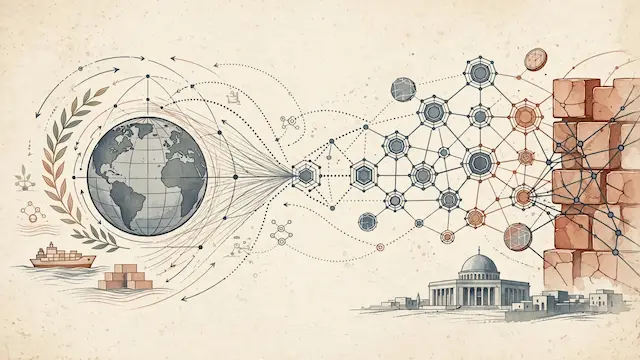
Prime Minister Benjamin Netanyahu has outlined a security and economic vision for Israel that focuses on circumventing potential international sanctions, a stark contrast to his previous emphasis on economic achievements and global standing. In an interview, Netanyahu discussed plans to use digital currencies and blockchain technology to navigate economic and banking sanctions, rather than solely focusing on preventing them. He expressed concern about sanctions on Israel's financial system and stated that preparations are underway for an "economy that bypasses" such measures, including a request to develop a plan using blockchain.
The author questions how Israel reached a point where its Prime Minister calmly discusses bypassing sanctions as if it were a technical issue, contrasting this with the approach of a leader who would prioritize preventing sanctions by restoring international relations and trade ties. While acknowledging the need for contingency planning, the article argues there's a significant difference between preparing for the worst and presenting sanctions circumvention as an economic solution.
This approach echoes Netanyahu's 2025 remarks about adapting to an economy less dependent on the outside world, a concept he termed "Athens and Super-Sparta" and "autarkic economy," despite his stated preference for free markets. The article notes that previous statements about self-sufficiency were clarified as relating primarily to arms production, but the current focus on blockchain and digital currencies suggests a broader economic shift.
The piece critically examines the feasibility of using blockchain to bypass sanctions, pointing out that US Treasury regulations apply to digital currencies and that such technology cannot replace global banking systems or negate sanctions. It highlights that sanctions can disrupt imports, exports, foreign investment, and credit, ultimately impacting jobs, salaries, and prices. The author expresses bewilderment that a leader with Netanyahu's economic acumen would propose sanctions circumvention without detailing how to prevent them in the first place.
The article contrasts Netanyahu's current stance with his 2003 role as Finance Minister, when he championed a free, competitive, and globally connected Israeli economy. It argues that Israel, unlike Russia or Iran, cannot afford to detach from the global economy due to its reliance on international trade, technology, and investment. The author concludes by questioning the timing of these discussions on the eve of elections, when citizens face severe cost-of-living issues, suggesting that while technology can facilitate transactions, it cannot rebuild trust or repair international relations.
Mentioned




