
Unsolved 2002 Israeli Bank Vault Heist: The $25 Million Mystery
Translated & summarized from Maariv by baba
An audacious heist at a Tel Aviv Discount Bank in 2002 saw $25 million in valuables stolen from 451 breached vaults. The perpetrators, who remain uncaught, meticulously drilled through a concrete wall from a confined space over several months. Despite a massive investigation involving Israeli security agencies, the crime's technical execution remains a mystery. The lead investigator still seeks answers about how the sophisticated operation was carried out.
The story in 5 lines · by baba
- Perpetrators stole an estimated $25 million from 451 bank vaults in a 2002 Tel Aviv heist.
- The thieves drilled a precise hole through a thick concrete wall from a confined space.
- Evidence suggests the heist took place over two to three months, with alarms repeatedly ignored.
- Security experts from Shin Bet and Mossad were consulted but could not explain the technical execution.
- The lead investigator still seeks answers about the sophisticated methods used in the unsolved crime.
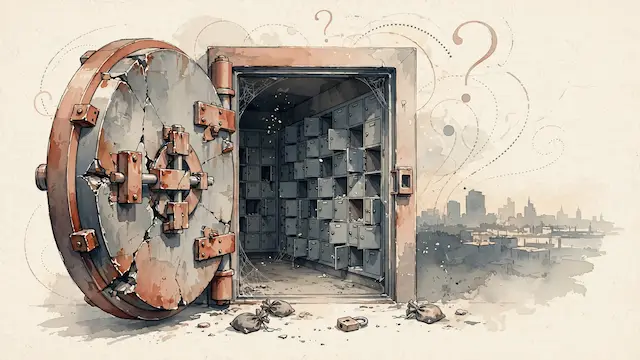
Over two decades after a brazen heist that saw 451 bank vaults breached and an estimated $25 million stolen, the perpetrators remain at large, leaving a lasting mark on the lead investigator. Retired Superintendent Nissim Daudi described the 2002 burglary at a Discount Bank branch in Tel Aviv as the most significant event of his career, deeply affecting him due to the personal and sentimental losses of victims, including Holocaust survivors who stored heirlooms.
The scale of the crime became apparent when investigators arrived at the scene to find hundreds of distraught vault owners and a chaotic situation requiring significant police presence. In the bank's northern vault room, 451 out of 452 vaults had been forced open, with the floor littered with cash, diamonds, and jewelry. The police estimated the stolen goods at $25 million, though Daudi noted that many items were uninsured and undocumented, making an exact figure impossible.
A key mystery was the precisely cut, 50x50 centimeter hole drilled through a 50-55 centimeter concrete wall into the vault room. The perpetrators accessed the area from an adjacent electrical room, separated by only 15-20 centimeters of space and a large air conditioning duct. Investigators were baffled as to how drilling equipment could have been used in such a confined space without dismantling the duct, a feat that even security experts from the Shin Bet and Mossad could not explain.
Evidence suggested the heist was not a single event but a prolonged operation spanning two to three months, with the thieves working on weekends. Alarms in the basement were repeatedly triggered but dismissed as false alarms by security guards who found no obvious signs of intrusion. The thieves meticulously cleaned up dust from drilling and covered their work with white plaster and paint, leaving the electrical room pristine to avoid suspicion.
In a dramatic near-miss, during the final weekend of the operation, the thieves had replaced the lock cylinder on the electrical room door. A security guard noticed the change but the building manager reportedly deferred a thorough investigation until Sunday, by which time the thieves had already escaped. Despite an extensive investigation involving over a thousand interrogations and significant resources, the case remains unsolved, with Daudi expressing a personal desire to understand the technical methods used by the perpetrators.