
The Jerusalem PostCulture
Israeli Study Reveals Prehistoric Hunter-Gatherers Maintained Wide Social Networks
Summarized from The Jerusalem Post by baba
Center-rightNeutral tone
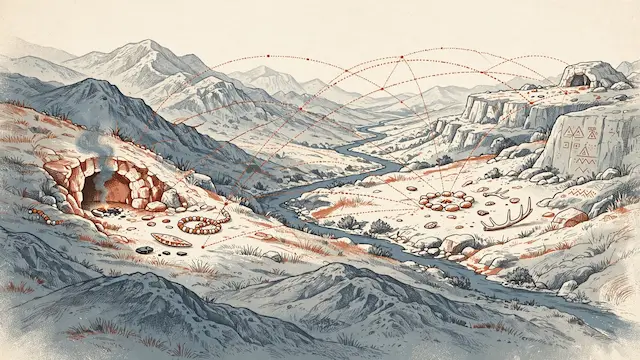
An Israeli study reveals that prehistoric hunter-gatherer communities in the Southern Caucasus, dating back 57,000 to 27,000 years ago, maintained social connections across distances of up to 200 kilometers. Researchers from the Hebrew University of Jerusalem used archaeological and geological evidence to show these small, dispersed groups were not isolated. The findings suggest these extensive social networks were vital for their survival and adaptation during periods of significant change.
The story in 6 lines · by baba
- Prehistoric hunter-gatherers in the Southern Caucasus were connected across distances up to 200 km.
- An Israeli study challenges assumptions about isolation in small, ancient populations.
- Evidence includes stone tools and obsidian artifacts showing routine travel between communities.
- Similar traditions across regions suggest long-distance knowledge and social exchange.
- These social networks were crucial for prehistoric community survival and adaptation.
- The study covers the period between 57,000 and 27,000 years ago.
The Jerusalem Post publishes in English. The key points are summarized above. Read The Jerusalem Post’s full report from the link at the top of the page.
Mentioned
Ariel Malinsky-BullerHebrew University of JerusalemNational Academy of Sciences of ArmeniaYerevan UniversityUniversity of Castilla-La ManchaUniversity of AlgarveAmerican School of Classical Studies at AthensUniversity of SevilleUniversity of California BerkeleySouthern CaucasusArmeniaGeorgiaArmenian Highlands