
Iran Threatens Israel and US With New Strikes on Critical Infrastructure
Translated & summarized from Cursorinfo by baba
Iran has warned Israel and the U.S. of significant attacks on military and civilian targets, including critical infrastructure like airports, pipelines, and undersea cables, if hostilities resume. Tehran also threatened to sink U.S. warships. The U.S. is increasing its military presence in the Middle East in response. Intelligence suggests Iran retains the capability to inflict serious damage despite previous U.S. strikes. The potential disruption of undersea communications near the Strait of Hormuz is a particular concern.
The story in 6 lines · by baba
- Iran warned Israel and the U.S. of large-scale attacks on military and civilian targets if hostilities resume.
- Threatened targets include airports, oil pipelines, energy facilities, and undersea internet cables.
- Iran also threatened to destroy U.S. warships and their crews in the region.
- The U.S. is reinforcing its military presence in the Middle East in response to the threats.
- Disruption of undersea communications near the Strait of Hormuz is a specific concern.
- Intelligence suggests Iran retains the capability to inflict significant damage despite previous losses.
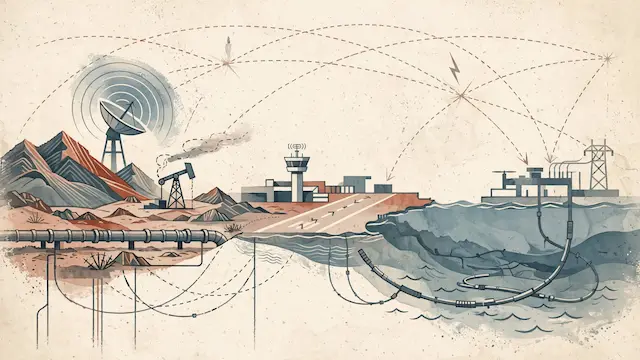
Iran has warned Israel and the United States of large-scale attacks on military and civilian targets should hostilities resume. Tehran specifically threatened strikes against airports, oil pipelines, energy facilities, and undersea internet cables, as well as the destruction of American warships with their crews. These warnings are being conveyed through both public statements and closed diplomatic channels, according to Maariv. Intelligence sources assess these threats as credible, noting Iran's continued capability to inflict significant damage on U.S. forces and allies in the Middle East, despite substantial losses from previous actions.
Pentagon estimates from September indicated that initial U.S. strikes destroyed up to 90% of Iran's drone, ballistic missile, and naval infrastructure. However, Iran has reportedly resumed limited missile production in fortified underground facilities using pre-accumulated components, and its capacity for simultaneous multi-directional attacks remains a concern. Previous Iranian strikes caused considerable damage to U.S. airbases, diplomatic sites, and the Fifth Fleet headquarters in Bahrain, as well as energy and industrial facilities in the UAE, a gas processing plant in Qatar, and airports in Dubai, Kuwait, and Bahrain.
In a potential new conflict, Tehran intends to expand its target list to include critical civilian infrastructure. A particular threat involves disrupting undersea communications near the Strait of Hormuz. Yadollah Javani, Deputy Commander of the IRGC for Political Affairs, suggested Iran could sever internet cables passing through the strait, impacting international communications and economic activity far beyond the region. Foreign Minister Abbas Araghchi also cautioned that new strikes would pose a serious threat to civilian populations and the global economy.
Iran has also informed intermediaries of its intent to target U.S. naval vessels, potentially leading to crew casualties. In response, Washington is bolstering its military presence in the region, deploying an additional carrier strike group and Marine units. U.S. President Donald Trump has previously alluded to potential new strikes on Iran post-U.S. midterm elections. U.S. and Israeli militaries are reportedly considering various response options, while the U.S. State Department has ordered non-essential personnel and their families to evacuate Saudi Arabia due to threats from Yemen's Houthis, and reduced its presence in other regional diplomatic missions.
Tehran anticipates that prolonged conflict and the expenditure of interceptors could strain Israel's, U.S. facilities', and Arab states' air and missile defense systems. U.S. officials are also concerned about potential assistance from Chinese entities providing satellite imagery for tracking U.S. naval movements. Despite economic challenges, Iran continues to rely on asymmetric warfare tactics, targeting not only military bases but also infrastructure vital to energy, transportation, and international communications.
Mentioned



