
Fifth Foreign Firm Withdraws From Controversial Jerusalem Cable Car Project
Translated & summarized from Mignews by baba
The Italian consulting firm ROPES is the fifth foreign company to withdraw from Jerusalem's controversial cable car project, citing other business obligations. Supporters believe the project will boost tourism, while opponents fear cultural damage and impact on the Silwan neighborhood. The Jerusalem Development Authority had planned to award ROPES a contract without a tender.
The story in 5 lines · by baba
- Italian firm ROPES is the fifth foreign company to exit the Jerusalem cable car project.
- The project aims to transport 3,000 visitors per hour to the Western Wall.
- Opponents cite potential cultural damage and impact on the Palestinian neighborhood of Silwan.
- The Jerusalem Development Authority planned to bypass a tender for ROPES' consultancy.
- The cable car route is intended to connect the city center to the Old City.
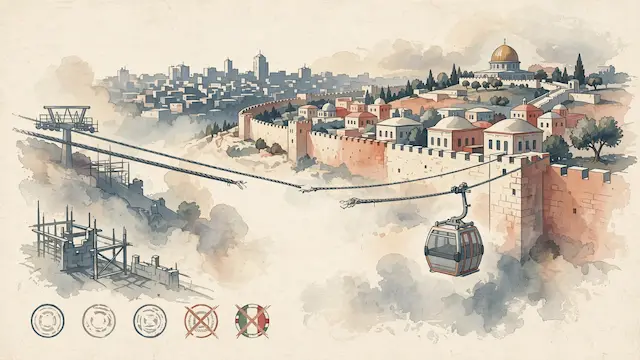
The Italian consulting firm ROPES has become the fifth foreign company to withdraw from the contentious Jerusalem cable car project, which aims to connect the city center to the Old City. ROPES' General Director, Stefan Obexer, cited other company commitments in India as the reason for their withdrawal. The Jerusalem Development Authority had initially intended to award ROPES a consultancy contract without an open tender. Israeli media reports suggest the company's owner initially agreed to participate but later regretted the decision, though ROPES has not yet issued an official statement.
Supporters of the cable car, including the Ministry of Tourism and the Jerusalem Municipality, argue it is an economically viable solution capable of transporting up to 3,000 visitors per hour to the Western Wall. However, opponents, comprising human rights activists, archaeologists, and heritage preservation experts, express concerns about potential cultural and political damage. They contend the proposed route would impact the Palestinian neighborhood of Silwan, negatively alter the city's historical appearance, and fail to resolve transportation issues. The organization Emek Shaveh specifically warns that the project could increase settler influence and transform the cultural landscape of Jerusalem's historic center.
Mentioned
The same event, reported separately by each outlet. Open a few to compare what different newsrooms emphasize — and what they leave out.
Centre 1Other 1

Not the same event — other stories that share this one’s people, places, or theme: background, reactions, and follow-ups.
