
Rabbi: Olive Harvest Dispute Can Be Life-Threatening
Translated & summarized from Arutz Sheva by baba
Rabbi Elisha Wolfson stated that disputes over olive harvests from Palestinian groves in Judea and Samaria can be life-threatening. He cited the late Rabbi Mordechai Eliyahu, who reportedly ruled that fruits from trees planted on someone else's land belong to the landowner. Wolfson also noted the security concerns, arguing that such activities can be used for hostile purposes, and emphasized the Jewish people's right to the entire Land of Israel.
The story in 5 lines · by baba
- Rabbi Elisha Wolfson stated that olive harvest disputes can be life-threatening.
- He cited Rabbi Mordechai Eliyahu's view that fruits belong to the landowner.
- Wolfson mentioned Rabbi Shmuel Eliyahu and Rabbi Dov Lior on the issue.
- The security implications of olive harvesting were also highlighted.
- The discussion relates to Palestinian groves in Judea and Samaria.
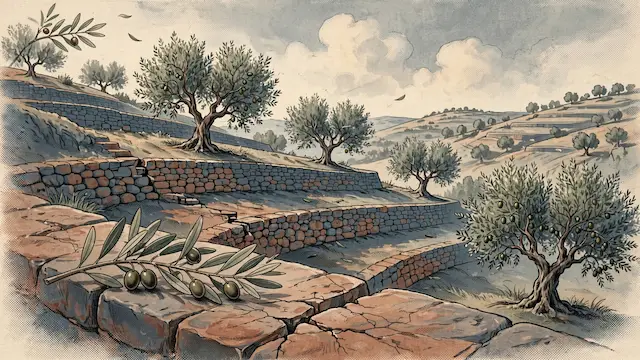
Rabbi Elisha Wolfson stated that in certain locations, the struggle over olive trees, particularly concerning harvests from groves belonging to Palestinians in Judea and Samaria, can escalate into a matter of life and death. He presented views attributed to the late Sephardic Chief Rabbi Mordechai Eliyahu, suggesting that the fruits of trees planted on land not owned by the planter belong to the landowner. "You planted a tree on my land without permission. The tree stays here, the fruits are mine, you leave here!" Wolfson quoted Eliyahu as saying, referencing the biblical verse "and the labor of nations you shall inherit."
Wolfson shared a personal experience from his time living in Pisgot, where he participated in an olive harvest outside the settlement. Following criticism, he consulted Rabbi Shmuel Eliyahu, Mordechai Eliyahu's son, who provided a ruling consistent with the position attributed to his father. Rabbi Dov Lior has also expressed a similar opinion permitting olive harvests under specific circumstances.
However, Wolfson acknowledged the complexity of land ownership issues in Jewish law and noted that he had not fully investigated all aspects. He emphasized the divine promise of the Land of Israel to the Jewish people, citing the verse "Arise, walk through the land in the length of it and in the breadth of it; for I will give it unto thee." He stressed that this promise does not negate the need for Halachic (Jewish legal) clarification regarding fruit ownership.
Furthermore, Rabbi Wolfson highlighted the security implications of the olive tree dispute. He argued that in some areas, planting trees and harvesting olives can be used as a means of establishing presence on the ground and potentially engaging in hostile activities. "There are places where the struggle over the trees is truly a struggle for survival, for life!" he declared, reinforcing the concept of the Jewish people's right to the entire Land of Israel.


